
Artificial intelligence is revolutionizing how we create content, with AI writing tools becoming essential assets for digital professionals in 2026. The surge in demand for faster, smarter, and more reliable content creation has fueled the rise of powerful platforms. In the ever-evolving landscape, rytr vs closerscopy stands out as a key debate among marketers, bloggers, and agencies.
Choosing the right solution can dramatically improve efficiency and content quality. This article offers a clear, unbiased comparison of both tools, covering features, pricing, user experience, language support, pros and cons, and real-world applications. Continue reading to discover which AI writing assistant will best support your goals in 2026.
Overview of Rytr and ClosersCopy in 2026
The AI content creation landscape has evolved rapidly, and rytr vs closerscopy stands out at the forefront as we move into 2026. These platforms have carved distinct niches, offering tailored solutions for a wide range of users. Understanding their positions, strengths, and technological advancements is key to making an informed choice.

Market Position and Popularity
Both Rytr and ClosersCopy have experienced significant growth over recent years. Rytr, launched in 2021, quickly became popular for its accessible pricing and versatile content generation. By 2026, it boasts a stellar 4.7 out of 5 rating from over 600 user reviews, reflecting high satisfaction among freelancers, startups, and global content teams.
ClosersCopy, established earlier, has focused on empowering marketers and agencies with robust sales copy features. Its reputation is built on a 4.2 out of 5 score from G2, with a loyal following among sales professionals and agencies. The platform’s user base has expanded in response to new AI-driven frameworks and advanced SEO tools.
Here’s a quick comparison of user ratings and market reach:
| Tool | User Rating | Reviews | Main Audiences |
|---|---|---|---|
| Rytr | 4.7/5 | 600+ | Bloggers, SMBs, freelancers |
| ClosersCopy | 4.2/5 | 400+ | Agencies, marketers, enterprises |
Both tools have rolled out significant updates in 2026, introducing improved AI output quality, new templates, and enhanced collaboration features.
Core Use Cases and Applications
When evaluating rytr vs closerscopy, it is essential to understand their core strengths. Rytr excels as a multipurpose solution, supporting diverse content types such as blog posts, emails, product descriptions, and creative writing. Its adaptability makes it a favorite for users seeking flexibility and consistent quality across formats.
ClosersCopy, meanwhile, is renowned for its expertise in sales-driven content. It shines when creating ad copy, landing pages, email campaigns, and long-form sales letters. The platform’s sales copy frameworks are designed for high conversion, making it a top pick for agencies and marketing teams.
Key productivity benefits include:
- Accelerated content creation, reducing time spent on drafts.
- Overcoming writer’s block with AI brainstorming.
- Scaling output for agencies and teams managing multiple projects.
For example, rytr vs closerscopy users often report significant time savings, especially when generating bulk content for blogs or running high-volume ad campaigns. ClosersCopy’s specialized frameworks give it an edge in sales copy, while Rytr’s broad template library supports everything from technical articles to social media posts.
Technology and AI Capabilities
The technological foundation of rytr vs closerscopy is a major factor in their ongoing success. Both platforms leverage proprietary AI engines, regularly updated to deliver more accurate, contextually relevant output. Rytr offers over 40 templates, making it simple for users to jump into any writing task with minimal setup.
ClosersCopy distinguishes itself with an impressive suite of 700+ frameworks. This vast library allows for deep customization and workflow automation, catering to advanced users and teams with unique content needs. Both tools have improved their AI’s ability to maintain tone, style, and factual relevance throughout 2026.
Custom template builders, step-by-step wizards, and real-time collaboration have become standard. Rytr’s intuitive controls and ClosersCopy’s advanced configuration options ensure users can tailor the AI’s output to their brand voice and industry requirements. In the ongoing rytr vs closerscopy debate, technological adaptability and output quality remain decisive factors for many professionals.
Feature-by-Feature Comparison
Choosing the right AI writing tool requires a clear, detailed comparison of what each offers. In this section, we break down the core functionalities of Rytr and ClosersCopy, highlighting their strengths and differences. This rytr vs closerscopy analysis will help you decide which solution best fits your workflow and content needs.
Content Generation and Templates
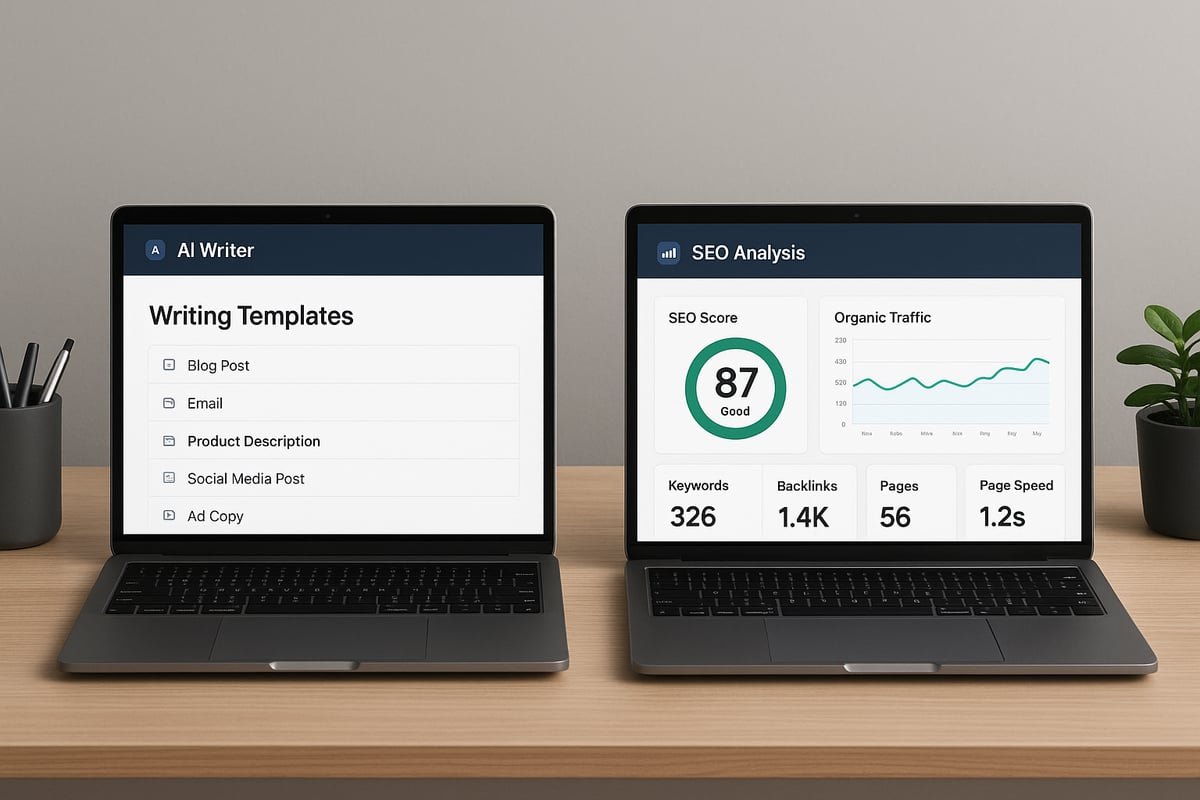
When evaluating rytr vs closerscopy, template variety is a key differentiator. Rytr delivers over 40 templates covering blog posts, emails, product descriptions, and more. Its streamlined interface lets users reword, shorten, or expand text with a single click, making it especially accessible for quick tasks.
ClosersCopy, on the other hand, boasts more than 700 frameworks. This extensive library includes specialized fill-in-the-blank templates for sales copy, email sequences, and website content. Users can choose between short-form and long-form content, with ClosersCopy providing advanced options for structuring persuasive sales pages or detailed articles.
Here is a quick comparison:
| Feature | Rytr | ClosersCopy |
|---|---|---|
| Templates/Frameworks | 40+ | 700+ |
| Long-form Writing | Yes | Yes |
| Rewriting/Summarization | One-click actions | Built-in frameworks |
| Tone Adjustment | 20+ tones | Multiple frameworks |
Both tools support content rewriting and summarization. Rytr’s strength is speed and simplicity, while ClosersCopy excels in depth and customization, making this aspect of rytr vs closerscopy a central point for users with diverse content needs.
SEO and Optimization Tools
For anyone comparing rytr vs closerscopy, SEO capabilities are a major consideration. ClosersCopy offers a robust built-in SEO optimizer with features like keyword analysis, SERP integration, and a planner for mapping out content strategy. Its “Copy Spam Analysis” tool is especially valuable for email marketers seeking high deliverability rates.
Rytr includes a basic SEO analyzer, aiding with keyword placement and meta description generation. However, ClosersCopy stands out for comprehensive optimization, allowing users to research keywords and audit their drafts directly inside the platform.
Automated external linking and meta tag suggestions are available in both, but ClosersCopy’s features are more advanced. For a deeper discussion on the strengths and pitfalls of such features, see The pros and cons of AI writing tools.
Overall, in the context of rytr vs closerscopy, those prioritizing SEO and deliverability will find ClosersCopy’s toolkit more compelling.
Collaboration and Workflow
Team collaboration and workflow automation are increasingly crucial in the rytr vs closerscopy debate. ClosersCopy supports multi-seat plans, enabling agencies and teams to work in tandem on large projects. It features project organization tools, real-time editing, and custom template builders, streamlining collaborative writing.
Rytr offers team accounts, making it simple for multiple users to manage shared content. Its browser-based platform ensures quick access and easy sharing, although workflow automation is less advanced compared to ClosersCopy. Both tools allow for project organization, but ClosersCopy’s step-by-step teaching wizard and advanced sharing make it better suited for agencies and larger teams.
Custom workflows, template creation, and detailed user permissions give ClosersCopy an edge for complex, multi-author environments. For solo content creators or small teams, Rytr’s intuitive approach remains a strong choice in the rytr vs closerscopy comparison.
Language and Tone Support
A standout factor in the rytr vs closerscopy evaluation is language and tone support. Rytr covers over 30 languages, including Arabic, Farsi, Vietnamese, and more. It also provides 20+ adjustable tones, making it ideal for brands targeting diverse markets.
ClosersCopy supports 20+ languages, focusing on the most widely used international options. Both solutions offer tone adaptability, but Rytr’s broader language range and tone versatility make it particularly attractive for global teams and multilingual campaigns.
For businesses seeking to create content in less common languages or adapt messaging for various audiences, Rytr’s extensive support is a decisive advantage in the rytr vs closerscopy decision.
Integrations and Accessibility
Integration and accessibility further distinguish rytr vs closerscopy. Rytr provides a browser extension, allowing users to generate content directly within their favorite platforms. Its minimal interface is mobile-friendly and compatible across devices, making on-the-go content creation seamless.
ClosersCopy operates as a web app, offering a comprehensive dashboard accessible from any browser. While it lacks a dedicated browser extension, it compensates with a powerful in-app experience and compatibility with various operating systems. Integration with third-party tools is limited for both, but ClosersCopy’s focus is on delivering a full suite within its platform.
For users who prioritize accessibility and quick access, Rytr’s extension may tip the scales. Those seeking a robust, centralized workspace will appreciate ClosersCopy’s detailed environment in the rytr vs closerscopy evaluation.
Pricing, Plans, and Value for Money
Navigating the pricing landscape is essential when comparing rytr vs closerscopy. Both tools offer distinct plans, features, and value propositions tailored to a range of users, from solo creators to large agencies. Understanding the differences ensures you select the right AI writing assistant that fits your workflow and budget.
Rytr Pricing Structure
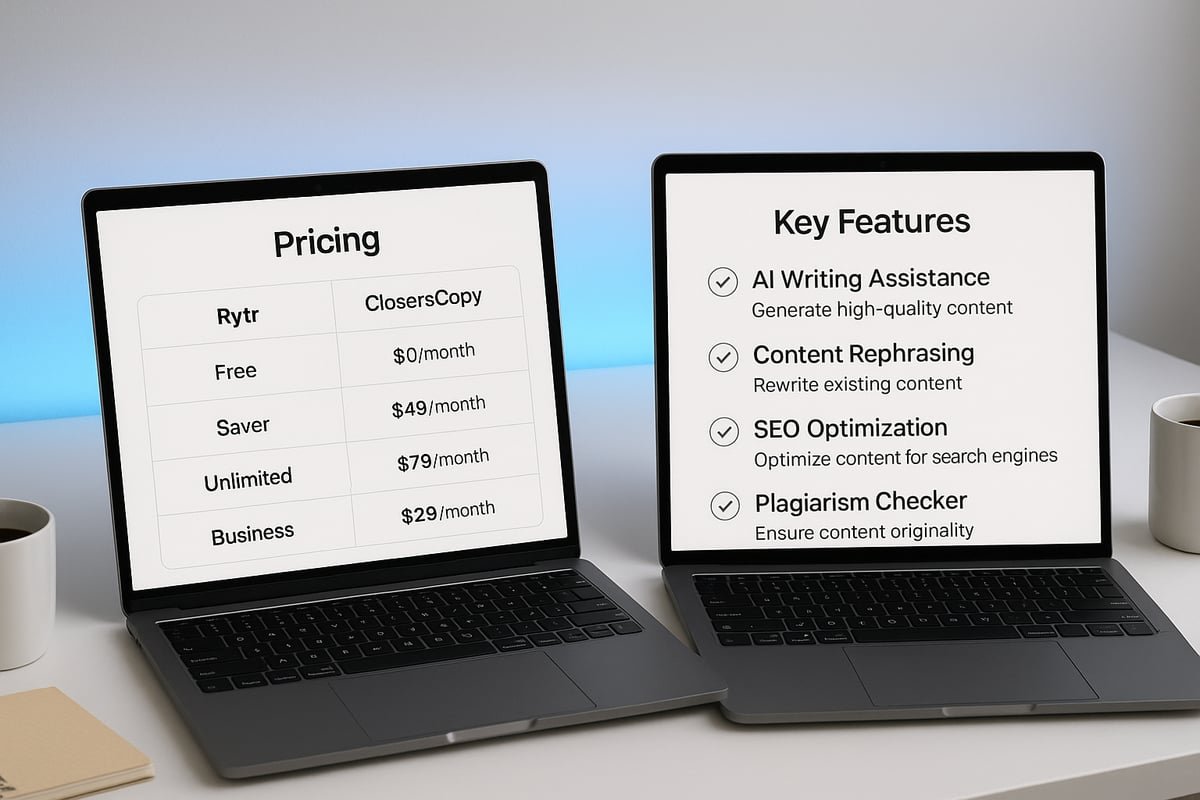
Rytr stands out in the rytr vs closerscopy debate by offering one of the most accessible entry points in the AI writing market. It provides a free plan, which includes 10,000 characters per month, access to 40+ templates, support for over 30 languages, 20+ tones, and the ability to generate five images monthly.
For users needing more, the Saver plan costs $9 per month. This tier unlocks 100,000 characters, custom use cases, and 20 images monthly. The Unlimited plan, priced at $29 per month, offers unlimited characters, 100 images, a dedicated manager, and priority support.
These plans cater to freelancers, startups, and small businesses seeking affordability without sacrificing essential features. The ability to start for free allows users to test Rytr’s capabilities before committing to a subscription.
ClosersCopy Pricing Structure
When evaluating rytr vs closerscopy for team or agency use, ClosersCopy offers highly scalable options. The Power plan is $49.99 per month, providing 300 AI runs, 50 SEO audits, and two seats, making it suitable for small teams or power users.
The Superpower plan, at $79.99 per month, delivers unlimited AI writing, three seats, and comprehensive SEO audits. For larger teams and agencies, the Superpower Squad plan costs $99.99 per month, supporting five seats and offering the most robust collaboration features.
ClosersCopy’s higher pricing reflects its emphasis on advanced SEO tools, workflow automation, and multi-seat collaboration. These plans address the needs of agencies, marketers, and enterprises requiring high-volume output and sophisticated optimization features.
Cost-Benefit Analysis
A direct rytr vs closerscopy comparison reveals clear trade-offs between affordability and advanced capabilities. Rytr’s free and low-cost plans make it ideal for individuals and small businesses focused on basic content generation, language diversity, and ease of use.
ClosersCopy, while more expensive, justifies its price with advanced SEO features, extensive frameworks, and team collaboration tools. Its plans scale efficiently with business growth, especially for agencies managing large content projects.
Here’s a snapshot comparison:
| Feature/Plan | Rytr (Saver/Unlimited) | ClosersCopy (Power/Superpower/Squad) |
|---|---|---|
| Monthly Price | $9 / $29 | $49.99 / $79.99 / $99.99 |
| Characters/AI Runs | 100k / Unlimited | 300 runs / Unlimited |
| Seats | 1 / 1 | 2 / 3 / 5 |
| SEO Audits | None | 50 / Unlimited |
| Image Generation | 20 / 100 | N/A |
| Languages Supported | 30+ | 20+ |
Customer satisfaction trends show Rytr users appreciate its cost-effectiveness, while ClosersCopy users value its robustness for advanced projects. Ultimately, choosing between rytr vs closerscopy depends on your required features, team size, and content goals.
User Experience, Interface, and Learning Curve
Navigating the user experience is a crucial part of evaluating rytr vs closerscopy. Both platforms have invested heavily in onboarding, interface design, workflow productivity, and community resources. Let’s break down each aspect so you can see how these tools cater to different users and needs.

Onboarding and Tutorials
Getting started with rytr vs closerscopy is a streamlined process for most users. ClosersCopy offers a comprehensive onboarding experience, featuring a step-by-step teaching wizard that guides you through every key function. The platform also provides an extensive FAQ section, which helps new users solve common issues quickly.
Rytr approaches onboarding differently. Its browser extension makes accessing the platform seamless, and it comes with a series of concise video tutorials. These resources walk users through basic actions like generating content, using templates, and adjusting tone. Both tools offer customer support via chat and email, but Rytr’s dedicated account managers on higher plans provide an extra layer of assistance for premium users.
For anyone comparing rytr vs closerscopy, the onboarding process is designed to minimize the learning curve, regardless of your technical background.
Interface Design and Usability
User interface plays a significant role in rytr vs closerscopy. ClosersCopy features a clean, jargon-free dashboard with intuitive navigation. Its layout caters to users who prefer a structured workspace, making it easy to access frameworks, SEO tools, and project folders.
Rytr, on the other hand, is known for its minimal, browser-based interface. The simplicity appeals to beginners and non-writers who want to generate content without distractions. Rytr’s design is also highly mobile-friendly, allowing users to create and edit content on various devices with ease.
Both tools prioritize clarity and accessibility, but rytr vs closerscopy diverge in their approach. ClosersCopy is ideal for users who value advanced organization, while Rytr excels for those seeking a lightweight, straightforward environment.
Productivity and Workflow Enhancements
When it comes to boosting productivity, rytr vs closerscopy each offer unique tools. ClosersCopy includes advanced project management features, such as a drag-and-drop editor. This allows users to organize sections, rearrange content, and fill in template blanks quickly. The platform’s fill-in-the-blank frameworks are especially helpful for structured copywriting tasks.
Rytr focuses on efficiency with its one-click actions. Users can instantly rewrite, summarize, or adjust the tone of any content block. These shortcuts are invaluable for overcoming writer’s block and speeding up content iteration. Collaboration is possible on both platforms, but ClosersCopy’s multi-seat plans and real-time editing make it a better fit for teams, while Rytr’s sharing features are more basic.
The rytr vs closerscopy productivity comparison ultimately comes down to your workflow preferences and team size.
Community and Support Resources
Support and community engagement are key elements in the rytr vs closerscopy debate. ClosersCopy maintains a robust online knowledge base, premium support options, and an active user community where members exchange tips and templates. Verified testimonials often highlight the effectiveness of the teaching wizard and responsive support team.
Rytr’s support ecosystem includes a searchable help center, video guides, and a growing user forum. Its customer service is praised for quick responses, especially for users on higher-tier plans. For those interested in the broader implications of AI writing, exploring how AI writing vs human writing compares can provide useful context about expectations and quality.
User feedback consistently notes that the learning curve for rytr vs closerscopy is manageable, thanks to these resources. Each tool’s community fosters continuous learning, making it easier for users to adapt and maximize their chosen platform.
Language Support, Customization, and Global Reach
In today’s interconnected world, the ability to create content in multiple languages and adapt tone is vital for businesses aiming to reach a global audience. When comparing rytr vs closerscopy, language support, customization, and accessibility become critical factors for content teams and agencies scaling internationally.
Supported Languages and Localization
Rytr stands out in the rytr vs closerscopy debate with support for over 30 languages, making it a powerful tool for multinational teams. Unique languages like Arabic, Farsi, Vietnamese, and Turkish are included, expanding reach into emerging markets. ClosersCopy, while offering 20+ languages, focuses on widely used options such as English, Spanish, French, and German.
Here’s a quick comparison:
| Tool | Number of Languages | Unique Examples |
|---|---|---|
| Rytr | 30+ | Arabic, Farsi, Vietnamese |
| ClosersCopy | 20+ | English, German, Spanish |
Localization goes beyond translation. Both tools allow users to write content tailored to regional audiences, but Rytr’s broader language set gives it an edge for global campaigns. As highlighted by AI Writing Statistics 2026, the demand for multilingual AI content is rapidly increasing, making such features essential in the rytr vs closerscopy comparison.
Customization and Flexibility
Customization is another key area in rytr vs closerscopy. ClosersCopy offers a robust custom template builder, enabling users to craft industry-specific frameworks. This empowers agencies and enterprises to standardize messaging across multiple projects.
Rytr, on the other hand, provides custom use cases and over 20 distinct writing tones, from formal to playful. This flexibility allows content creators to match brand voice or switch styles for different audiences.
Key customization features:
- ClosersCopy: Custom template builder, workflow automations, reusable frameworks
- Rytr: Custom use cases, 20+ tones, direct tone switching, industry adaptability
This level of adaptability ensures that, whether crafting legal documents or creative ads, rytr vs closerscopy can fit a wide spectrum of content needs.
Accessibility and Inclusivity
Accessibility is essential when evaluating rytr vs closerscopy for global teams. Rytr’s browser extension and mobile-friendly interface make it easy for users to generate content on the go, regardless of device or location. ClosersCopy, as a web app, offers a consistent experience across desktops and tablets.
For non-English content creators, Rytr’s extensive language support opens doors to new markets. Both tools offer browser compatibility, but Rytr’s lightweight design is especially suited for users in regions with varying internet speeds.
The impact on international SEO is significant. By enabling content creation in multiple languages, rytr vs closerscopy helps businesses improve their visibility in diverse search markets and connect with audiences worldwide.
Strengths, Limitations, and Best Fit Scenarios
The rytr vs closerscopy debate centers on how each tool addresses distinct user needs. Understanding their unique strengths, limitations, and ideal scenarios helps users make informed choices for 2026.
Where ClosersCopy Excels
ClosersCopy stands out in the rytr vs closerscopy comparison for its robust SEO capabilities and workflow automation. Its integrated SEO audit, planner, and spam analysis tools give marketers, agencies, and sales teams advanced control over content optimization. The teaching wizard offers step-by-step guidance, enabling even new users to master sophisticated copywriting techniques.
Custom template builders and 700+ frameworks provide deep flexibility. For teams producing high-converting sales pages, email campaigns, and long-form content, ClosersCopy’s multi-seat plans and collaborative features are invaluable. Agencies, in particular, benefit from its Superpower Squad plan, which supports seamless teamwork and project management.
In summary, ClosersCopy excels when advanced SEO, customization, and team collaboration are priorities in the rytr vs closerscopy landscape.
Where Rytr Stands Out
Rytr shines in the rytr vs closerscopy matchup by offering affordability, accessibility, and versatility. Its free and low-cost tiers make it an attractive choice for freelancers, startups, and small businesses. With support for 30+ languages and 20+ tones, Rytr enables global teams to create content tailored to diverse audiences.
The intuitive browser-based interface, quick onboarding, and one-click actions for rewriting or summarizing content make Rytr especially beginner-friendly. For rapid blog generation, multi-language campaigns, and quick turnaround projects, Rytr’s streamlined approach reduces barriers and accelerates productivity.
Rytr is best suited for users who value simplicity, cost-effectiveness, and broad language support in the rytr vs closerscopy evaluation.
Limitations and Considerations
Despite their strengths, both Rytr and ClosersCopy have notable limitations. ClosersCopy’s higher entry price and steeper learning curve can be challenging for individuals or small teams. Its advanced features may require training, and not all users need extensive SEO tools.
Rytr, on the other hand, lacks some of the advanced SEO and customization options found in ClosersCopy. While its output is generally reliable, users occasionally report issues with template limitations or AI-generated content requiring manual refinement.
For those exploring alternatives or seeking a broader comparison, the Copymatic vs Writesonic review offers insights into other top AI writing assistants beyond the rytr vs closerscopy debate.
Real-World User Feedback
User reviews on platforms like G2 and AuthorityHacker reveal key themes in the rytr vs closerscopy discussion. ClosersCopy earns praise for its powerful SEO tools and collaborative workflows, though some users highlight a steeper learning curve. Agencies and marketers appreciate its output quality for sales-focused content.
Rytr receives high marks for ease of use, affordability, and multi-language support. Freelancers and SMBs value its quick setup and intuitive features, but some note occasional AI output glitches or limited advanced controls.
Overall, both tools maintain strong satisfaction ratings, with users emphasizing reliability, responsive support, and ongoing feature improvements. The rytr vs closerscopy decision ultimately depends on which strengths align with a team’s needs.
Use Cases, Industry Applications, and Future Outlook
AI writing assistants have become essential for businesses tackling high-volume content needs. As the rytr vs closerscopy debate gains traction, understanding practical use cases and future developments is crucial for choosing the right platform. Both tools have carved out significant roles across industries, supporting teams of all sizes in 2026.
Practical Applications Across Industries
Rytr and ClosersCopy have rapidly expanded their reach into various sectors. In marketing, these platforms streamline the creation of ad copy, email campaigns, and SEO-focused articles. E-commerce brands rely on them for crafting persuasive product descriptions, review responses, and value propositions, helping boost conversion rates and customer engagement.
Bloggers and media professionals turn to rytr vs closerscopy for efficient article generation, idea brainstorming, and content repurposing. Agencies use both tools to scale up content production, reduce turnaround time, and maintain consistency across client projects. The broad application of these AI assistants allows teams to address writer’s block, accelerate workflows, and ensure a steady flow of high-quality content.
| Industry | Rytr Focus Areas | ClosersCopy Strengths |
|---|---|---|
| Marketing | Ad copy, SEO articles | Sales copy, campaign plans |
| E-commerce | Product descriptions | Persuasive landing pages |
| Blogging/Media | Blog drafts, summaries | Long-form storytelling |
| Agencies | Multi-language content | Team collaboration tools |
Scalability and Team Collaboration
As organizations grow, the scalability offered by rytr vs closerscopy becomes a decisive factor. Both platforms support team collaboration, but ClosersCopy’s Superpower Squad plan stands out for agencies needing up to five seats and advanced workflow tools. Real-time editing, project sharing, and custom template builders allow distributed teams to work seamlessly, regardless of location.
Rytr’s accessible pricing and intuitive onboarding make it ideal for startups and small businesses seeking to quickly deploy AI writing without steep learning curves. Its browser-based extension and mobile compatibility enable content creation on the go, supporting remote and hybrid work environments.
Collaboration features, such as step-by-step teaching wizards and multi-seat access, ensure that teams can manage projects efficiently, track progress, and maintain quality standards. This flexibility is vital as businesses adapt to changing market demands and scale content production.
Future Trends and Innovations (2026 and Beyond)
Looking ahead, the rytr vs closerscopy rivalry will continue to drive innovation in AI-powered content creation. Advances in contextual understanding, natural language processing, and template diversity will further elevate the quality of AI-generated content. Users can expect even broader language support and industry-specific frameworks to emerge.
Market research highlights that the AI Writing Assistant Software Market Growth is projected to reach $12.3 billion by 2032, indicating strong demand for scalable, intelligent writing tools. Future iterations may bring deeper integration with analytics, SERP tracking, and content optimization platforms, empowering users to make data-driven decisions and maximize ROI.
As user expectations rise, continuous improvements in collaboration, customization, and output quality will shape the evolution of AI writing assistants. Choosing between rytr vs closerscopy will depend on balancing current needs with the ability to adapt to future trends in content creation.
Ready to boost your organic rankings with AI?
Unlock the power of our AI Content Platform—built for SEO, AI Search, GEO, and AEO.
Create high-quality, optimized content in just a few clicks.
✅ Free account with 5,000 words/month
✅ No credit card required
✅ Stay ahead with AI-powered content marketing
Don’t get left behind. Start for free today.
Try our AI Content Platform today