
Understanding how many blog posts for SEO you need to publish each month is one of the most common questions facing content marketers and business owners in 2026. The answer isn’t as straightforward as a single number. Your ideal publishing frequency depends on multiple factors including your industry, competition, resources, and content quality standards. This comprehensive guide explores the data-driven insights, industry benchmarks, and strategic considerations that determine the optimal number of blog posts to maximize your search engine rankings and organic traffic growth.
The Foundational Numbers: Industry Benchmarks for Blog Publishing
When evaluating how many blog posts for SEO your business should produce, industry research provides valuable baseline metrics. According to HubSpot’s research on blog posting frequency, companies publishing 16 or more posts per month generate significantly more traffic than those publishing fewer articles.
Breaking Down the Frequency Spectrum
Different publishing frequencies correlate with varying SEO outcomes:
- 1-4 posts monthly: Minimal SEO impact, suitable only for maintenance or highly specialized niches
- 4-8 posts monthly: Baseline presence, generates modest organic growth
- 9-15 posts monthly: Competitive positioning, noticeable ranking improvements
- 16+ posts monthly: Aggressive strategy, substantial traffic increases and authority building
The data reveals a clear trend: higher frequency typically produces better results, but only when quality remains consistent.

Quality Versus Quantity Balance
Publishing volume alone doesn’t guarantee SEO success. A study examining optimal blogging frequencies across industries emphasizes that content quality significantly impacts results. Publishing 20 mediocre articles monthly will underperform compared to 8 exceptional, well-researched pieces that genuinely serve user intent.
Quality indicators that matter for SEO include:
- Comprehensive topic coverage addressing search intent
- Original research, data, or unique perspectives
- Proper keyword optimization without over-stuffing
- Strong internal linking structure
- External citations to authoritative sources
- Optimized technical elements (meta descriptions, headers, image alt text)
Calculating Your Ideal Blog Post Volume
Determining how many blog posts for SEO your specific situation requires involves analyzing several business-specific factors. This calculation helps you establish a realistic, sustainable publishing schedule that aligns with your resources and goals.
Resource Assessment Framework
| Resource Category | Evaluation Questions | Impact on Volume |
|---|---|---|
| Team Capacity | How many writers do you have? What’s their bandwidth? | Direct correlation with output |
| Budget | Can you invest in freelance writers or AI tools? | Enables scaling beyond internal capacity |
| Expertise | Do you have subject matter experts available? | Affects research time per article |
| Tools | Are you using automation for research and optimization? | Increases efficiency per post |
When resources are limited, platforms like Content Redefined can dramatically increase output without sacrificing quality by automating research, optimization, and content generation processes.
Competitive Analysis Methodology
Research your top five competitors in search results. Track their publishing frequency over three months to establish your competitive baseline. If competitors average 12 posts monthly and dominate rankings, you’ll likely need similar or higher volume to compete effectively.
Steps for competitive analysis:
- Identify your primary keyword targets
- Note the top 10 ranking domains for each keyword
- Use tools to track their publication dates and frequency
- Calculate average monthly posts across competitors
- Add 20-30% to match or exceed their publishing pace
Industry-Specific Publishing Recommendations
Different industries have varying content needs and competitive landscapes. Understanding how many blog posts for SEO your specific sector requires helps set realistic expectations and strategies.
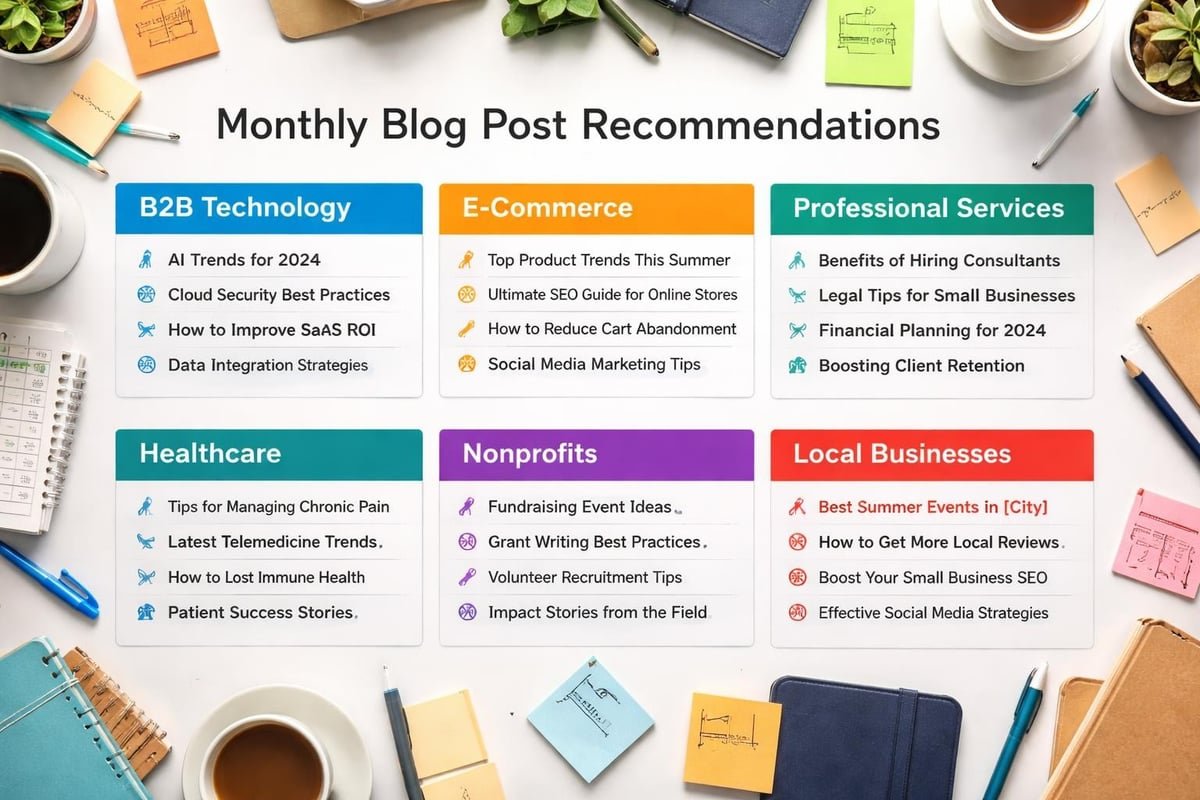
B2B Technology and Software
B2B tech companies typically benefit from higher publishing frequencies due to rapidly evolving landscapes and complex buyer journeys. Recommended range: 12-20 posts monthly.
This sector thrives on educational content addressing specific pain points, product comparisons, and thought leadership. AI-powered content platforms enable tech companies to maintain this volume while ensuring technical accuracy and depth.
E-commerce and Retail
E-commerce businesses should maintain steady content flow covering product categories, buying guides, and seasonal trends. Recommended range: 8-16 posts monthly.
The focus should balance evergreen buying guides with timely seasonal content. Understanding e-commerce SEO best practices helps optimize both product pages and supporting blog content.
Professional Services and Consulting
Consulting firms, law offices, and financial advisors typically need fewer but more authoritative posts. Recommended range: 4-8 posts monthly.
These industries prioritize demonstrating expertise and building trust. Each piece should be thoroughly researched and position the firm as an authority. SEO keywords for consulting businesses should target high-intent, solution-focused queries.
Healthcare and Medical Practices
Medical practices balance patient education with establishing clinical authority. Recommended range: 6-12 posts monthly.
Content must be medically accurate, compliant with regulations, and address common patient questions. SEO strategies for doctors focus on local search optimization combined with educational content.
The Weekly Posting Framework
Breaking monthly targets into weekly schedules creates manageable workflows. Research on effective blogging frequencies suggests 2-4 posts weekly hits a sweet spot for most businesses.
Two Posts Per Week Strategy
Publishing twice weekly (8-9 posts monthly) provides consistency without overwhelming resources. This schedule works well for:
- Small businesses with limited content teams
- Industries with longer sales cycles
- Companies prioritizing comprehensive, research-intensive articles
Monday and Thursday publishing captures both week-start engagement and mid-week traffic peaks.
Three to Four Posts Per Week Strategy
Publishing 3-4 times weekly (12-16+ posts monthly) accelerates SEO gains. According to research on consistent blogging benefits, this frequency signals active relevance to search engines and builds audience loyalty faster.
This aggressive schedule suits:
- Content-focused businesses and publishers
- Competitive industries requiring constant visibility
- Companies with dedicated content teams or automation tools
Content Calendar Architecture for SEO Success
Understanding how many blog posts for SEO you need is only half the equation. Strategic calendar planning ensures those posts work synergistically to boost rankings.
Topic Clustering Strategy
Organize your blog posts into thematic clusters around pillar topics. Each cluster includes:
- One comprehensive pillar post (2,500-4,000 words) targeting a broad keyword
- 8-12 supporting cluster posts (1,200-2,000 words) targeting long-tail variations
- Strategic internal linking connecting all cluster content
This structure amplifies SEO impact beyond individual post rankings. Your introduction to SEO should cover fundamental concepts, while supporting posts dive into specific tactics.
Seasonal and Evergreen Balance
| Content Type | Percentage | Publication Timing | SEO Benefit |
|---|---|---|---|
| Evergreen | 60-70% | Year-round, consistent schedule | Long-term compound traffic growth |
| Seasonal | 20-30% | 6-8 weeks before peak season | Captures trending searches |
| Trending | 10-20% | Immediate response to news | Short-term traffic spikes, authority building |
This mix ensures sustainable traffic growth while capitalizing on timely opportunities.
Scaling Content Production Without Sacrificing Quality
Many businesses struggle to publish sufficient blog posts for SEO because traditional content creation is time-intensive. Modern automation solutions address this bottleneck effectively.
AI-Powered Content Automation Benefits
Platforms leveraging artificial intelligence for content creation can multiply output while maintaining quality standards. Key advantages include:
- Speed: Generate optimized drafts in minutes rather than hours
- Consistency: Maintain brand voice and SEO best practices across all posts
- Research automation: Automatically analyze SERPs and identify ranking opportunities
- Optimization: Built-in SEO analysis ensures each post meets technical requirements
- Scalability: Produce 50+ monthly posts with the same resources previously producing 5-10
AI content writing tools don’t replace human expertise but amplify it, handling research and optimization while writers focus on strategic direction and refinement.
Building Hybrid Content Teams
The most effective 2026 content operations combine human creativity with AI efficiency:
- AI handles: First drafts, keyword research, SERP analysis, technical optimization, image generation
- Humans handle: Strategic planning, expert insights, brand voice refinement, final editing
- Collaboration: AI accelerates production while humans ensure quality and authenticity
This hybrid approach enables answering how many blog posts for SEO you can realistically produce by expanding capacity without proportionally increasing costs.

Measuring and Adjusting Your Publishing Frequency
After establishing your baseline publishing schedule, continuous measurement determines whether you’re publishing enough blog posts for SEO success.
Essential Metrics to Track
Monitor these KPIs monthly to assess your content strategy effectiveness:
- Organic traffic growth rate: Month-over-month and year-over-year increases
- Keyword rankings: Track position changes for target keywords
- Indexed pages: Ensure Google is discovering and indexing your content
- Engagement metrics: Time on page, bounce rate, pages per session
- Conversion rate: How blog traffic converts to leads or customers
Optimization Cycles
Evaluate your strategy quarterly and adjust based on data:
If organic traffic plateaus despite consistent publishing:
- Increase post length and depth
- Enhance topic research and user intent matching
- Improve internal linking architecture
- Update and republish older content
If you’re exceeding traffic goals:
- Maintain current frequency while improving conversion optimization
- Expand into new keyword territories
- Experiment with content formats (videos, infographics, tools)
If resources are strained:
- Prioritize quality over quantity
- Leverage AI SEO tools to maintain output
- Focus on updating existing high-performers rather than only creating new content
Common Mistakes When Determining Blog Post Volume
Understanding how many blog posts for SEO you need involves avoiding common strategic errors that undermine results.
Mistake 1: Copying Competitor Volume Without Context
Simply matching a competitor’s 20 posts monthly ignores crucial variables like their domain authority, backlink profile, team size, and historical content library. A newer site may need higher frequency to compensate for lower authority.
Mistake 2: Inconsistent Publishing Schedules
Publishing 15 posts in January, 3 in February, and 8 in March confuses both search engines and audiences. According to research on blogging frequency and engagement, consistency matters as much as volume. Better to maintain 8 posts monthly consistently than fluctuate between 3 and 20.
Mistake 3: Prioritizing Speed Over Substance
Rushing thin, 500-word posts to hit numerical targets damages SEO rather than helping it. Optimal blog post length for SEO typically ranges from 1,500 to 2,500 words because comprehensive content ranks better.
Mistake 4: Ignoring Content Updates
Focusing exclusively on new posts while existing content becomes outdated wastes opportunities. Allocate 20-30% of your content resources to updating and improving existing posts.
Advanced Strategies for Maximizing Blog Post ROI
Beyond determining how many blog posts for SEO you should publish, strategic optimization multiplies the impact of each piece.
Strategic Internal Linking
Every new blog post should include 3-5 contextual internal links to related content. This distributes authority throughout your site and helps search engines understand your content architecture.
Create a linking strategy that:
- Points newer posts to established pillar content
- Updates older posts with links to new related articles
- Connects content within topic clusters
- Uses descriptive, keyword-rich anchor text
SERP Feature Optimization
Target featured snippets, People Also Ask boxes, and other SERP features by:
- Identifying questions within your target keywords
- Formatting answers clearly (lists, tables, concise paragraphs)
- Using schema markup where appropriate
- Structuring content with clear headings that match search queries
Multi-Channel Content Distribution
Each blog post should fuel multiple marketing channels:
- Email newsletters: Feature new posts to subscribers
- Social media: Create multiple social posts from each article
- Video content: Transform key points into video scripts
- Podcasts: Discuss article topics in audio format
This approach maximizes ROI per post, making even lower publishing frequencies more effective.
Setting Realistic Goals for Your First Year
For businesses just starting their SEO blog strategy, understanding how many blog posts for SEO you need begins with realistic first-year benchmarks.
Months 1-3: Foundation Building
Target: 4-8 posts monthly
Focus on establishing your pillar content and basic topic coverage. Prioritize quality and learning your process over volume. This phase builds your foundation while your team develops efficient workflows.
Months 4-6: Scaling Up
Target: 8-12 posts monthly
With workflows established, gradually increase output. Begin filling content gaps and targeting more competitive keywords. This phase should show initial organic traffic improvements.
Months 7-12: Competitive Pace
Target: 12-20 posts monthly (depending on industry)
Reach your sustainable long-term publishing frequency. By now, you should see consistent traffic growth, improving keyword rankings, and established authority in your niche.
Different resources affect these timelines. Businesses using free SEO AI tools can often accelerate this schedule by reducing per-post production time while maintaining quality standards.
The question of how many blog posts for SEO you need doesn’t have a universal answer, but the research clearly shows that consistent, quality-focused publishing in the range of 8-20 posts monthly delivers measurable results for most businesses. Success depends on balancing ambitious volume targets with sustainable workflows that maintain content quality and strategic alignment. Content Redefined helps businesses achieve this balance by automating the time-intensive aspects of SEO content creation, enabling you to publish more high-quality, optimized articles without expanding your team or budget. Start creating SEO-optimized content today and watch your organic traffic grow consistently month after month.
Ready to boost your organic rankings with AI?
Unlock the power of our AI Content Platform—built for SEO, AI Search, GEO, and AEO.
Create high-quality, optimized content in just a few clicks.
✅ Free account with 5,000 words/month
✅ No credit card required
✅ Stay ahead with AI-powered content marketing
Don’t get left behind. Start for free today.
Try our AI Content Platform today