
Trying to pick between Frase vs Jasper can feel weirdly harder than writing the content itself. Both are powerful AI writing tools, both promise faster content creation, and both claim to help with SEO and copywriting. But once you start digging into features, long‑form content, SEO briefs, brand voice, and templates, it’s not obvious which one actually fits how you work day to day.
This article breaks down Frase and Jasper in plain English, using real marketing and SEO scenarios instead of just tossing feature lists at you. We’ll look at how each tool handles research, optimization, long‑form blogs, landing pages, and short‑form copy—and what that really means for bloggers, agencies, in‑house marketers, and founders trying to scale content without burning out or blowing the budget. By the end, you’ll know which tool makes more sense for your goals, and when it might be worth looking at newer, more flexible alternatives too.
Before you dive into feature lists and pricing pages, it helps to zoom out and see what Frase and Jasper are actually built for. Both are AI writing tools, but they solve slightly different problems: Frase is obsessed with SEO research and long-form content, while Jasper is all about fast, on-brand marketing copy across multiple channels.
What Frase Does vs What Jasper Does
Here’s how their core focus breaks down:
- Frase: Combines SERP research, content briefs, and on-page optimization with an AI writer. You plug in a keyword, it analyzes the top results, suggests headings, questions, and key topics, then helps you draft and optimize in one place.
- Jasper: Acts like a brand-aware copywriter with dozens of templates for blog intros, Facebook ads, emails, product descriptions, social posts, and more. Its strength is turning your brand voice and goals into quick, usable copy snippets.
- Core philosophy:
- Frase = “research + SEO + drafting in one place.”
- Jasper = “fast, branded copy across channels.”
In practice, Frase feels more like an SEO content workstation, while Jasper feels like a versatile marketing assistant you can throw any copy task at.
Who Each Tool Is Really For (Plus a Quick Comparison)
Most reviews stop at features; what you actually need is fit:
- Frase is ideal for: Niche site owners, SEO agencies, publishers, and in-house content teams building blogs, pillar pages, and topic clusters who care about rankings and content depth.
- Jasper is ideal for: SaaS and ecom brands, solo marketers, and agencies producing ads, emails, social content, and landing pages that need consistent tone and speed.
At a high level, Frase usually starts cheaper for SEO-focused docs, while Jasper’s value shines when you’re creating lots of different content types and want to lock in a strong brand voice. This quick mental model will make the rest of the comparison much easier to follow.
Content Research & SEO Features (Frase’s Home Turf)
If you care about ranking on Google, this is the part that really matters. Most top-ranking comparisons agree: Frase is built around SEO research, while Jasper focuses more on generating on-brand copy and leans on third-party tools for deep optimization. Let’s break down what that actually looks like in a real workflow, not just in a features list.
How Frase Handles SERPs, Briefs, and Optimization
Here’s where Frase earns its reputation as an SEO-first AI writer:
- SERP analysis & competitor outlines: Frase pulls in top-ranking pages for your target keyword, showing common headings, word count ranges, related topics, and questions users ask. It basically reverse-engineers what’s working in the SERP.
- Automatic content briefs: With a click, you can generate a brief with suggested H2/H3s, FAQs, and key subtopics. For agencies and in-house teams, this alone can replace hours of manual research.
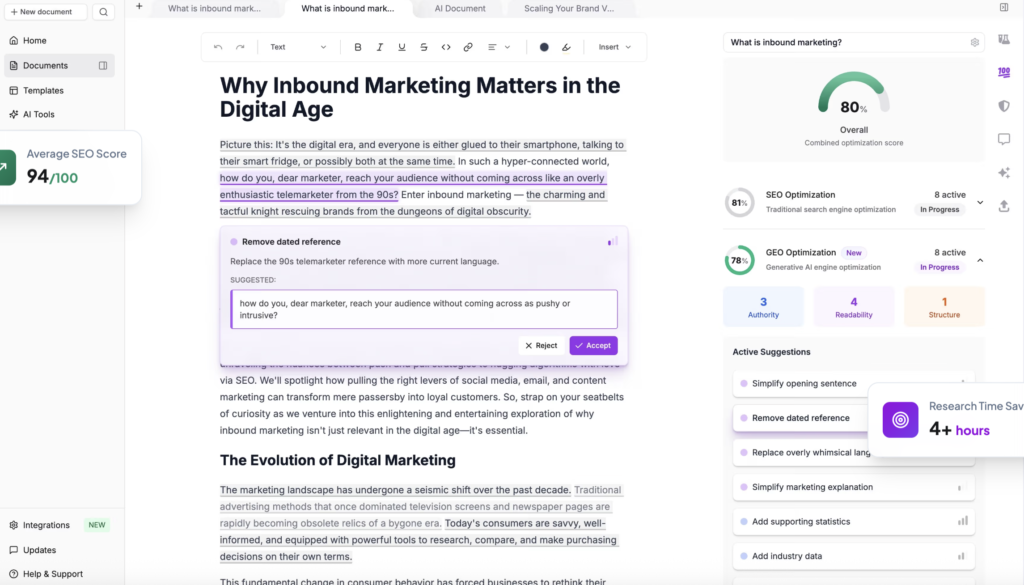
- Content scoring & keyword optimization: As you write, Frase scores your content against competitors and suggests related phrases, entities, and questions to cover, helping you avoid thin or off-topic content.
In practice, this means if you’re trying to outrank a competitor’s blog post, Frase gives you a roadmap: what to include, how deep to go, and where your draft is still weak compared to page-one results.
What Jasper Offers for SEO (and When It’s Enough)
Jasper doesn’t try to be a full SEO suite, but it’s not clueless about search either:
- SEO via integrations: Many teams pair Jasper with Surfer SEO or similar tools. Jasper handles the writing; Surfer handles the on-page optimization guidelines.
- Prompt-based SEO basics: You can nudge Jasper with prompts like “include these keywords naturally” or “optimize this paragraph for [keyword]” and get decent, search-friendly copy for simpler use cases.
- Great for light SEO needs: For landing pages, product pages, or basic blog posts where “good enough” SEO is fine, Jasper’s speed and templates often beat a heavier SEO workflow.
One subtle point most articles gloss over: SEO tools can slow you down if you’re over-optimizing every single piece. If you’re building topic clusters, authority content, and programmatic SEO, Frase’s depth is a huge win. But if you just need an on-brand landing page with a few SEO basics, Jasper plus a lightweight checklist (or an integration) might be faster and perfectly adequate.
Writing Experience & AI Quality (Tone, Control, and Output)
When people compare Frase vs Jasper, they usually start with features—but what really matters is how it feels to write inside each tool and how good the AI output actually is. This is where day-to-day productivity is won or lost, especially if you’re cranking out content every week.
How it feels to write inside Frase vs Jasper
- Frase’s editor is built like an SEO-first writing workspace. You’ve got your SERP research, competitor headings, and optimization panel on one side, and your draft on the other. It’s great for staying grounded in search intent, but it can feel a bit “busy” if you’re not an SEO person.
- Jasper’s editor is more like a clean copywriting canvas with AI commands and templates layered on top. You rely more on prompts, recipes, and frameworks (like AIDA/PAS) than on SERP data.
- Control over the AI differs: in Frase, you steer the AI with structure (outlines, headings, brief data). In Jasper, you steer it with brand voice, tone presets, and more conversational instructions.
In practice, writers who think in terms of “what should this rank for?” often feel at home in Frase, while marketers who ask “how do I make this sound like our brand?” tend to prefer Jasper’s flow.
Tone, style, and output quality across content types
- Long-form blog posts: Frase usually wins for staying on-topic and covering all the subtopics Google expects, thanks to its outline and SERP-driven brief. Jasper can produce long-form too, but you’ll need to guide it more to avoid fluff or missed angles.
- Short-form copy (ads, emails, social): Jasper is stronger here. Its templates and brand voice features make it easier to generate punchy hooks, ad variations, and email intros that actually sound human and on-brand.
- Product pages and landing pages: Jasper shines for conversion-focused copy, while Frase is better if those pages also need to be tightly aligned with specific search queries.
A big difference many reviews gloss over: prompt engineering effort. Jasper rewards people who are willing to experiment with prompts, commands, and recipes. Frase reduces that need by letting its research and brief do a lot of the guiding, which non-technical writers often appreciate.
Getting the best possible outputs from both tools
Whichever tool you lean toward, you’ll get dramatically better quality if you:
- Feed rich context: Add target keyword, audience, goal, and 2–3 example paragraphs so the AI copies your style rather than guessing.
- Work in passes, not one-shots: Use Frase to draft section by section from your brief, or Jasper to generate intro → body → CTAs instead of asking for a full post in one go.
- Edit with intent: In Frase, tighten repetition and add your expertise. In Jasper, tweak tone and specificity so it really sounds like your brand, not generic marketing speak.
Most top-ranking comparisons stop at “quality is similar,” but the real takeaway is this: Frase gives you structural quality out of the box; Jasper gives you stylistic quality if you’re willing to interact with it a bit more. Knowing which kind of “quality” you care about will make your choice much easier.
Templates, Workflows, and Use Cases (Where Each Tool Shines)
This is where the Frase vs Jasper debate gets real: what can you actually do with each tool day to day? Most reviews list features, but what you really care about is, “Which one fits how I work?” In this section we’ll look at templates, workflows, and concrete use cases so you can picture how these tools would slot into your content operation.
Jasper’s template-driven marketing machine
Jasper is built around reusable templates and repeatable marketing workflows:
- Pre-built templates for almost everything: blog post starter, AIDA/PAS frameworks, Facebook/Google ads, email subject lines, nurture sequences, product descriptions, LinkedIn posts, YouTube scripts, and more. Great when you’re churning out multi-channel campaigns.
- Brand voice baked into templates: once you set your tone and style, Jasper applies it across formats, so your homepage, ads, and emails actually sound like the same company.
- Lightning-fast ideation: marketers use Jasper as a brainstorming engine—spinning up hooks, angles, CTAs, and split-test variations in minutes instead of hours.
In practice, a DTC brand or SaaS team might open Jasper on Monday, generate ad copy variations, an email promo, and matching social posts—all inside template flows—then lightly edit and ship. It’s built for speed across channels more than deep, single-piece perfection.
Frase’s end-to-end SEO content workflow
Frase, on the other hand, is structured around a full research → outline → draft → optimize pipeline inside one doc:
- Research-first brief builder: you drop in a keyword, Frase scans the SERP, surfaces competitor headings, questions, and related topics, then turns that into a structured brief.
- Guided drafting in one editor: you or the AI draft directly inside Frase, using the brief, SERP insights, and topic suggestions as a guardrail so you don’t miss key angles.
- Optimization workflow for clusters and pillars: content score, topic coverage, and keyword suggestions help you build out topic clusters and pillar pages in a consistent way across dozens of URLs.
A niche content site or SEO agency might plan a cluster, spin up briefs for 10–20 articles in Frase, assign them to writers, then use the optimizer to bring each piece up to a target score before publishing. Where Jasper feels like a campaign toolkit, Frase feels like a long-form content factory.
Matching tools to business types and real-world limits
So who should pick what, realistically?
- Frase fits best if you run a content site, blog-heavy SaaS, or SEO agency where ranking on Google is the primary goal and you’re producing in-depth articles at scale.
- Jasper fits best if you’re a DTC brand, creative agency, or growth team that needs punchy, on-brand copy for ads, emails, and landing pages across multiple channels.
- Both can feel clunky with ultra-niche technical content, or in heavily regulated industries where every line needs legal review—here, AI is more of a first-draft helper than a full workflow engine.
Most comparisons stop at “who has more templates.” The real win is picking the tool whose default workflow looks most like your existing process. If you constantly bounce between SERP research and writing, Frase will feel natural. If you live in campaign calendars and creative briefs, Jasper’s templates will probably save you more time.
Collaboration, Workflow Management, and Integrations
This is where the “can my team actually use this every day?” question comes in. Most comparisons of Frase vs Jasper talk about features, but for agencies and in‑house teams, collaboration and integrations are what make or break a tool. Let’s look at how each platform handles real-world workflows, not just solo experimenting.
How Each Tool Handles Teamwork in Real Life
Content can be a paragraph, list, or combination depending on what best serves the information:
- Frase’s collaboration style: You get shared documents, folders, and the ability to create and reuse content briefs so everyone’s working from the same SEO game plan. Great when strategists and writers are separate people.
- Jasper’s team features: Stronger on “brand assets”—brand voice, style guides, and templates shared across seats so any writer can spin up on‑brand copy for any campaign quickly.
- How they fit into your stack: Frase plays nicely with WordPress, Google Docs, and SEO tools (plus Zapier), while Jasper leans into marketing stacks—plugging into CRMs, design tools, and scheduling platforms via Zapier and native integrations where available.
In practice, many agencies use Frase to create the brief and first draft, then move to Google Docs or a CMS for review. Jasper-heavy teams often live inside Jasper for ideation and drafting, then paste final copy into whatever tool the rest of the marketing team uses.
When You Need Simple vs Full-Blown Team Workflows
If you’re a solo creator or a two-person team, both tools can feel like overkill on the “collaboration” side—you mainly care that it’s fast and doesn’t break your existing process. But once you’ve got multiple writers, editors, and clients, differences show up fast:
- Pick Frase if you need repeatable SEO briefs, content scoring, and a central place where strategists and writers align on “what this article must cover.”
- Pick Jasper if your biggest challenge is keeping messaging and tone consistent across ads, emails, social, and landing pages for multiple brands.
- Watch out for gaps: Neither tool is a full project management system; you’ll still want ClickUp, Asana, Notion, or similar for deadlines, status, and client approvals.
Bottom line: think about where collaboration actually happens today—briefing, drafting, review, or publishing—and choose the tool that smooths those specific friction points instead of expecting it to magically run your entire content operation.
Pricing, Value for Money, and Scaling Costs
Let’s talk about what most comparison posts gloss over: how much Frase and Jasper actually cost once you’re using them week in, week out. Pricing pages look simple, but once you factor in limits, add‑ons, and extra tools, the “cheap” option can get expensive pretty fast.
How Frase and Jasper Structure Their Pricing
Here’s how the two tools typically break things down:
- Frase pricing basics: You usually pay based on number of documents, AI runs, and sometimes project limits. Entry plans are friendly for solo bloggers, but you’ll hit caps if you’re cranking out content at scale.
- Frase extras to watch: Advanced SEO features, extra user seats, or higher document limits can bump the monthly cost. Many teams also keep a separate keyword tool, which adds to your stack cost.
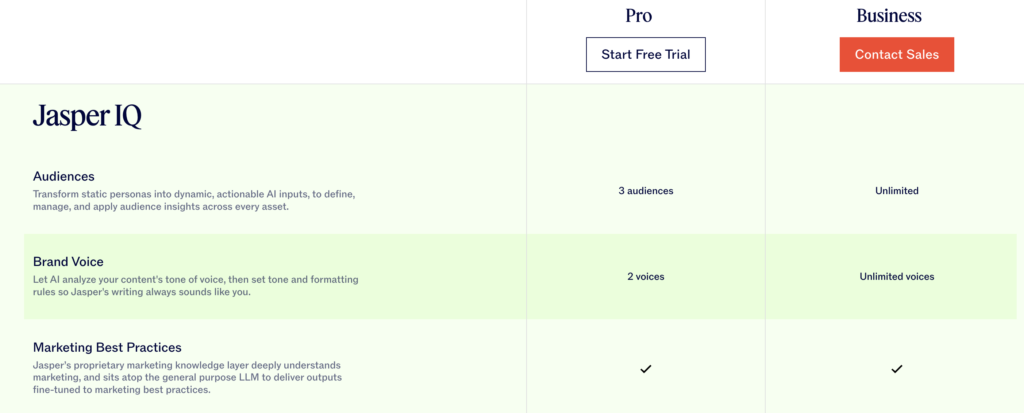
- Jasper pricing basics: Jasper leans on seats (number of users) and feature access (brand voice, templates, campaigns, etc.). Great if you have a marketing team, but those extra seats add up.
- Jasper extras to watch: You may still pay for an external SEO tool (like Surfer), plus design, scheduling, and CRM tools Jasper plugs into but doesn’t replace.
This is where top-ranking articles often stop. But what really matters is not the monthly subscription—it’s the cost per publish-ready piece of content for your specific situation.
What’s Actually “Worth It” at Different Stages
Think about value in terms of your current stage and output:
- Solo blogger just starting: Frase’s lower entry plan can be more approachable, especially if you live and die by organic search. Jasper might feel overkill unless you’re also doing lots of social and email content.
- Small agency with 5–10 clients: Both tools can work. Frase shines if you’re selling SEO retainers and content hubs. Jasper often wins if you’re writing ads, emails, and landing pages for multiple brands and need consistent brand voices.
- In-house team producing 20+ pieces/month: At this level, the question becomes: which tool saves the most editor time and reduces the need for extra subscriptions? Frase may replace parts of your SEO stack; Jasper may replace some copywriting overhead but not SEO research.
A simple rule of thumb: if search traffic is your main growth channel, Frase usually gives better ROI; if you’re running multi-channel campaigns with distinct brand voices, Jasper tends to pull ahead—just budget realistically for the rest of the tools you’ll still need.
Frase vs Jasper: Pros, Cons, and How to Choose
By this point you’ve probably realised Frase and Jasper aren’t trying to solve the exact same problem, which is why reviews can feel a bit all over the place. This section pulls everything together into clear pros, cons, and decision shortcuts so you can stop researching and actually pick a tool.
Frase vs Jasper: Strengths and Weaknesses Side‑by‑Side
Here’s how the two stack up when you look at them as complete products, not just as “AI writers”:
- Frase – Pros: Excellent SERP analysis, auto‑generated content briefs, topic and question research, and on-page optimization with content scoring. Great for building topic clusters, pillar pages, and long‑form blog content that actually ranks.
- Frase – Cons: Less focused on short-form marketing copy (ads, hooks, punchy social), and there’s a bit of a learning curve if you’re not already SEO-minded. It can feel like “too much” for someone who just wants quick copy ideas.
- Jasper – Pros: Strong brand voice system, tons of handy templates (AIDA, PAS, emails, ads, social posts), and smooth workflows for multi-channel marketing. Ideal for teams who care more about conversion and brand personality than keyword minutiae.
- Jasper – Cons: Weaker native SEO research; you’ll likely need extra tools or integrations. Some writers find it a bit template-bound, and complex briefs can require more prompt tinkering than you’d expect.
Most comparison posts stop at lists like this. In reality, your choice should come down to strategy and constraints, not just features: do you win by ranking more, or by converting better once people land on your site?
Clear Decision Shortcuts (Including When to Skip Both)
To make this practical, use these filters:
- Pick Frase if… your growth is SEO-heavy. You’re building content hubs, want to outrank competitors, and care about structure, internal linking, and topic authority. Think: niche sites, SEO agencies, B2B companies publishing deep, research-driven articles.
- Pick Jasper if… you live in brand storytelling and campaigns. You need on-brand copy for ads, emails, socials, and landing pages across multiple channels. Think: DTC brands, SaaS with a strong voice, creative agencies juggling lots of formats.
- You might not need either if… you publish very little content, or you already have a strong internal SEO + writing process and just want a basic AI drafting buddy. In that case, an all-purpose AI or a simpler tool might be enough.
- Or if you want “the best of both worlds”… there are newer tools emerging that try to combine SEO awareness with high-quality, low-fuss writing and friendlier pricing—worth keeping in mind as you read the conclusion.
The key is to choose based on the type and volume of content you actually ship, not the shiniest feature page. Once you’re clear on that, the right choice between Frase, Jasper, or a newer hybrid option becomes surprisingly obvious.

Frequently Asked Questions
Q: Is Frase or Jasper better for long-form blog content and SEO?
A: If your main goal is to rank blog posts and build topical authority, Frase usually has the edge. It’s built around SERP analysis, content briefs, and on-page optimization, so you can reverse-engineer what’s working for competitors and fill gaps. Jasper can absolutely write long-form content, but you’ll often need extra SEO tools (like Surfer) or manual research to match what Frase gives you out of the box. A lot of teams end up using Jasper for tone and copy, and Frase (or a similar tool) for SEO planning when they scale up publishing.
Q: Which tool is easier for beginners to learn?
A: For pure “open it and start writing” simplicity, Jasper feels more approachable. The templates, brand voice features, and guided prompts make it friendly if you’re not super technical or SEO-focused. Frase has a slightly steeper learning curve because it shows you SERP data, topic clusters, and optimization scores, which can overwhelm newer creators. That said, if you’re willing to spend a day learning Frase’s workflow, it can save you a ton of time on research and briefing later on.
Q: Can I use both Frase and Jasper together? Or is that overkill?
A: You can definitely combine them, and many agencies do. A common workflow is:
- Use Frase to research the topic, build an outline, and get SEO recommendations
- Export or copy that brief into Jasper
- Use Jasper to generate on-brand copy, headlines, and variations for different channels
It’s not overkill if you’re producing a lot of content or have paying clients. For solo bloggers on a budget, though, running two subscriptions can feel heavy, which is why some people look for newer tools that blend both sets of features in one place.
Q: Do I still need human editors if I use Frase or Jasper?
A: Yes. Both tools can speed up drafting and ideation, but you still need a human to fact-check, refine voice, and add real expertise. AI can hallucinate stats, oversimplify complex topics, or miss brand nuances. A good rule: let AI handle 60–80% of the first draft, then have a human tighten arguments, add unique examples, and ensure everything is accurate and on-brand. This is also where higher-quality AI tools (or more thoughtful prompts) can cut your editing time dramatically.
Q: What if my content is very niche or highly technical—will either tool work well?
A: This is where most top-ranking reviews agree: both Frase and Jasper can struggle with very niche or cutting-edge topics. They can structure content and suggest angles, but you’ll get the best results if you:
- Provide detailed context and source material (docs, notes, links)
- Use AI for organization, clarity, and examples, not original research
- Layer in your own domain expertise heavily in the edit
In ultra-technical spaces, AI is more of a writing assistant than a subject-matter expert, regardless of which platform you pick.
Q: How do I decide between these and newer AI content tools?
A: Think about your priorities: do you want mature ecosystems and lots of templates (Jasper), deep SEO research and optimization (Frase), or a leaner, more affordable all‑rounder? Established tools are great if you value stability and integrations. Newer platforms, like contentredefined.ai mentioned in the conclusion, try to combine strong SEO awareness with high‑quality drafts and simpler workflows at a lower price point. The smartest move is to trial 1–2 options in parallel for a week and see which one actually helps you hit “publish” faster with less stress.
Wrapping Up: Which AI Writer Actually Fits Your Workflow?
By now you’ve seen that Frase vs Jasper isn’t about which AI tool is “better” in a vacuum—it’s about what you’re trying to ship. Frase shines when you live and breathe SEO content, need SERP analysis, content briefs, and on-page optimization in one place, and care about systematically outranking competitors. Jasper is stronger when you need on-brand marketing copy across channels—emails, ads, social, landing pages—powered by templates and consistent brand voice. Your ideal pick comes down to content mix, team size, and how structured your current workflow already is.
If you’re unsure, a simple next step is to run a mini test: create one blog post and one landing page in both tools and compare the actual time-to-publish and editing load. And if you’re thinking, “I want SEO awareness, high-quality drafts, and a simpler, more affordable setup,” it’s worth also trialing a third option like contentredefined.ai alongside them. It aims to blend the strengths of both—clean workflow, stronger out-of-the-box quality, and friendlier pricing—so you can pick the platform that truly helps you publish better content, faster, without overcomplicating your stack.
Ready to boost your organic rankings with AI?
Unlock the power of our AI Content Platform—built for SEO, AI Search, GEO, and AEO.
Create high-quality, optimized content in just a few clicks.
✅ Free account with 5,000 words/month
✅ No credit card required
✅ Stay ahead with AI-powered content marketing
Don’t get left behind. Start for free today.
Try our AI Content Platform today