
A publishing strategy for founders batch vs drip decision is not a test of discipline. It is a choice between two workable ways to keep content moving when sales calls, launches, travel, and customer work take priority.
Batching builds a reserve of work. Drip publishing creates a steady release rhythm and keeps you close to current customer questions. For most founders without a marketing team, the practical answer is a hybrid: batch enough work to create a small buffer, then publish on a dependable schedule.
Batch and drip: what each approach means
Batch publishing means completing similar work in focused blocks. You might outline four articles in one session, draft two the following week, then schedule them for release over the month.
Drip publishing means creating and releasing content at a regular cadence, such as one article each week. In email marketing, a drip campaign is a planned series of messages delivered over time or in response to an action. The useful principle for founder content is the same: planned delivery, not a last-minute burst. Salesforce’s overview of drip marketing explains the email version of this model.
For founder-led content, the distinction is straightforward:
| Approach | Main advantage | Main risk | Best fit |
|---|---|---|---|
| Batch | Builds a buffer and reduces context switching | Drafts can stall before review or become dated | Founders with occasional longer focus blocks |
| Drip | Creates a regular habit and close feedback loop | Busy weeks can cause missed posts | Founders with a protected weekly slot |
| Hybrid | Combines a buffer with regular publishing | Needs a simple review routine | Most solo founders and small teams |
Batch publishing: when it helps and where it breaks
Batching works well when your calendar is uneven. If you can protect a two- or three-hour block once a month, it may be easier to create several pieces at once than to restart from a blank page every Tuesday.
Benefits of batching
- Fewer context switches. Research related customer questions together, then write while the subject is fresh.
- A practical buffer. Finished or near-finished work gives you something to publish when a launch or client issue takes over the week.
- Stronger thematic focus. A batch can cover one commercial theme, such as pricing objections, onboarding questions, or implementation concerns.
- Less pressure on publish day. Publishing becomes a review and scheduling task rather than a full writing session.
For example, a consultant could collect recurring questions from sales calls, turn them into four outlines, and release one answer each week. The content remains grounded in current buyer concerns, but the founder does not have to begin from scratch every week.
Risks of batching
Batching alone does not create a publishing system. The common failure is a folder full of rough drafts with no review date, owner, or scheduled release.
It can also create three problems:
- Stale angles. A product change or new customer objection can make an older draft less useful.
- Perfection loops. More time can lead to endless editing rather than a clear decision to publish.
- A review bottleneck. If only the founder can approve work, drafts wait until a quiet week that never arrives.
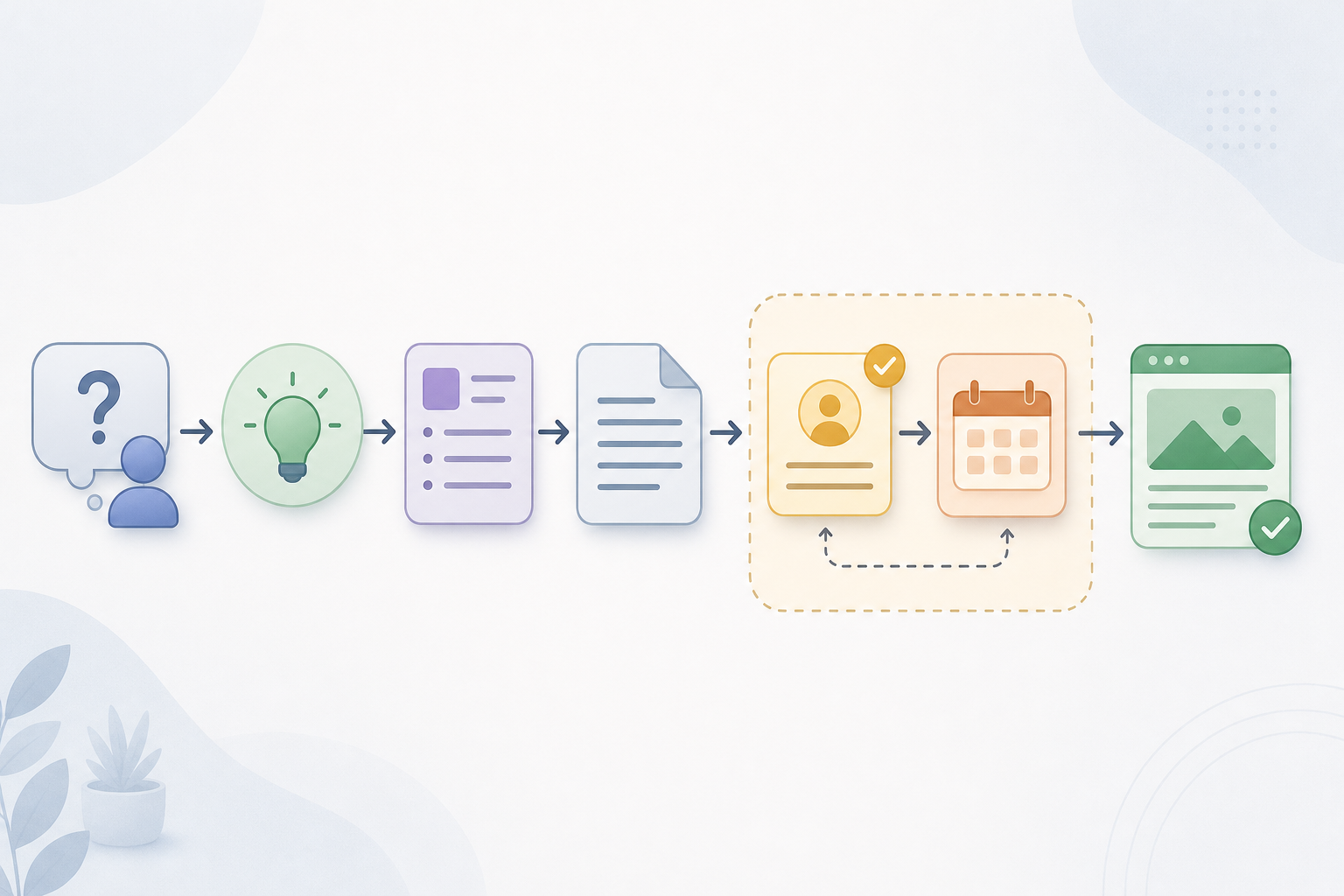
To avoid a draft graveyard, give every piece a visible status: idea → outline → draft → ready for review → scheduled → published. A draft is not a buffer until it is close enough to review and has a next step.
A simple batch workflow
Use one focused session to do one type of work at a time:
- Capture four to six questions from sales calls, support requests, proposals, or onboarding.
- Select two to four topics that serve one audience and one business goal.
- Outline each piece before drafting any of them.
- Draft without editing every sentence as you go.
- End the session by setting review dates and choosing release dates.
If your content plan exists but work still does not reach publication, the issue is often the handoff between draft, review, and schedule. See why content strategy exists but execution fails for a closer look at that operational gap.
Drip publishing: when a steady cadence is better
Drip publishing is a good fit when you learn quickly from customer conversations and can protect a consistent weekly slot. You create, review, and schedule one piece at a time rather than trying to build a library first.
Benefits of drip publishing
- Fast feedback. Use this week’s sales calls, objections, and replies to shape next week’s topic.
- Lower weekly scope. The goal is one useful piece, not an entire month of content.
- A repeatable habit. A fixed writing and review block can make content part of normal business operations.
- Room to adjust. Change direction when your offer, market, or buyer language changes.
This can suit service businesses with long buying cycles. A steady stream of clear answers can help prospects understand how you think while they compare options and build an internal case.
Risks of drip publishing
Drip becomes stressful when every step happens on the deadline. If topic choice, drafting, editing, approval, and scheduling all compete for the same hour, content is usually the first task to slip when the business gets busy.
A pure drip workflow needs two safeguards:
- a running list of approved topic ideas; and
- at least two pieces that are ready for review or close to it.
Without those safeguards, publishing can feel impossible without a team because each week starts with too many decisions.
A simple drip workflow
Choose one recurring slot and give it a narrow purpose. For example:
- Monday, 30 minutes: choose one topic and build the outline.
- Wednesday, 45 minutes: draft the article.
- Friday, 20 minutes: review, add links and metadata, then schedule.
The exact days do not matter. What matters is separating creation from review and making the final decision small: publish, revise, or move the piece back into the queue.
Which approach best prevents missed weeks?
For founders, batch versus drip is rarely an either-or decision. A hybrid approach usually prevents missed weeks best: batch creation gives you inventory before a difficult week arrives, while drip distribution keeps publication regular and leaves room for fresh customer insight.
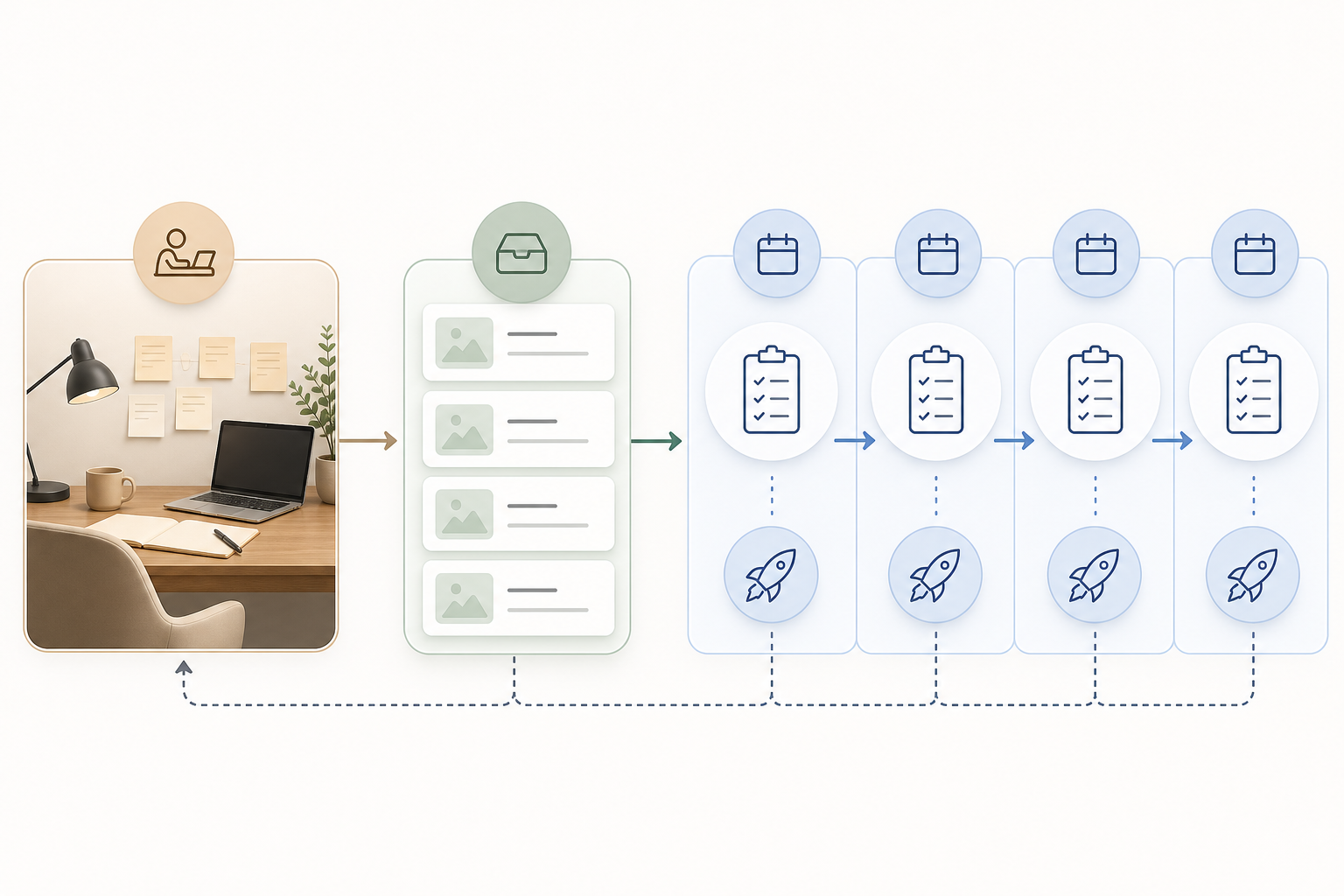
A useful default is: batch the inputs and early drafts; drip the final review and release.
Use this five-minute decision check
Rate each statement from 1 to 5. A higher score points toward the approach in the right-hand column.
| If this is true for you | Lean toward |
|---|---|
| I can protect a long focus block only once or twice a month | Batch |
| My week changes quickly based on customer conversations | Drip |
| I often miss posts during launches, travel, or delivery work | Batch, then drip |
| I can reliably review content for 30 minutes each week | Drip or hybrid |
| Our content needs several approvals, assets, or subject experts | Batch |
| We are testing our message and need to learn quickly | Drip |
If you lean toward batch on three or more lines, build a small buffer first. If you lean toward drip, still prepare at least two future topics so one busy week does not break the rhythm.
Three realistic founder schedules
1. Weekly drip schedule
Use this when you can reliably protect 60 to 90 minutes every week. Create and schedule one focused article at a time. Keep two topic ideas ready.
2. Monthly batch plus weekly review
Use one three-hour block to create four outlines or drafts. Then reserve 30 minutes each week to finish, review, and schedule one piece. This is a strong default for a founder with a variable calendar.
3. Quarterly theme sprint plus weekly publishing
Choose one theme, such as common buying objections or implementation mistakes. Build a set of related outlines in a sprint, then release them weekly. Review each piece shortly before publication so it remains current.
The goal is not maximum volume. A realistic cadence is one you can maintain in a bad month. For many founders, two to four useful articles a month is more sustainable than an ambitious plan followed by silence.
How to build a buffer without a draft graveyard
A buffer should reduce pressure, not hide unfinished work. Keep it small enough to manage and clear enough to act on.
Define what counts as ready
A piece belongs in your buffer only when it has:
- a clear reader problem and point of view;
- an outline or complete draft;
- a defined call to action or next step;
- a named review date; and
- any needed evidence, examples, images, or internal links identified.
Avoid calling ten loose ideas a content buffer. Ideas are valuable, but they do not protect a publishing date.
Use capture-not-create inputs
You do not need to invent topics in a separate brainstorm. Capture the material already moving through the business:
- questions prospects ask before buying;
- objections that appear in sales calls;
- steps explained in proposals or onboarding;
- support patterns and implementation issues;
- decisions customers struggle to make.
This approach keeps content close to your actual offer and buyer language. If choosing topics is where work stalls, how founders waste time choosing content topics can help reduce that decision load.
Keep one source of truth
Whether you use a spreadsheet, a project tool, or a planning platform, each piece needs one record with its status, owner, next action, and planned date. Store the title, draft link, target reader, call to action, and review notes together.
Do not scatter topic notes in one place, drafts in another, and publication dates in a third with no connection between them. That creates invisible handoffs and missed weeks.
Common publishing strategy mistakes founders make
Mistake 1: Planning around ideal weeks
A plan that requires perfect focus, no customer emergencies, and unlimited energy is not a plan. Set your cadence based on the week you are most likely to have, not the week you wish you had.
Fix: Choose a minimum viable cadence. For example, publish twice a month until you have a buffer. Increase only after you have kept that rhythm for several months.
Mistake 2: Treating every draft as a separate topic decision
When every article requires a new topic, angle, audience, and call to action, content becomes mentally expensive.
Fix: Work in themes. One theme can produce a comparison, a how-to guide, a FAQ, and an objection-handling article. This gives your audience a clearer story and makes drafting faster.
Mistake 3: Creating helpful content with no commercial clarity
A post can be informative and still fail to show why your business is relevant. Readers need to understand who the advice is for, what you believe, and what next step makes sense.
Fix: Before drafting, write two lines: the belief behind the article and the offer it supports. For instance: “Small teams need fewer decisions, not more tools” and “This guide helps operations leaders assess our onboarding service.”
Mistake 4: Leaving review until the end of the month
Founders often batch the creative work but postpone review, scheduling, and publication. The queue then becomes a backlog instead of a buffer.
Fix: Put a recurring review slot on the calendar. The only choices in that meeting should be approve, revise, re-queue, or retire.
Mistake 5: Assuming more output is always better
More posts do not solve a broken workflow. A modest, consistent cadence with clear topics and timely review is more useful than a burst of vague content followed by a gap.
Fix: Measure operational health first: no missed weeks, a visible next action for every draft, and a small reserve of ready work.
A practical hybrid workflow for founders without a marketing team
If you are starting from zero, try this four-week reset.
Week 1: Create the topic bank
Capture ten customer questions from existing conversations and materials. Choose four that match one audience, one business priority, and one clear conversion goal.
Week 2: Batch outlines and first drafts
Block two to three hours. Outline all four pieces, then draft the first two. Do not try to perfect them in the same session.
Week 3: Review and schedule the first piece
Complete the first draft, check its links and call to action, and schedule it. Bring the second draft to ready-for-review status.
Week 4: Publish, learn, and refill
Publish the second piece. Note the questions, replies, or sales conversations it creates. Use that insight to refine the remaining drafts and add one new topic to the bank.
After the reset, maintain one monthly batch session and one short weekly review slot. That gives you protection from busy weeks while leaving room to respond to what customers need now.
If you want help deciding whether to run that system yourself or bring in support, compare a content planning platform versus hiring a content strategist. Content Redefined AI offers founders a structured way to establish business context, direct content, and maintain a consistent publishing schedule while keeping the final review decision with the founder.
Publishing strategy for founders
Batch vs drip is a workflow choice. Choose batch if your time arrives in larger blocks and missed weeks are your main problem. Choose drip if you have a dependable weekly slot and need fast feedback from the market. Choose hybrid if you want the safety of a buffer without losing touch with current customer questions.
For most founder-led teams, consistency comes from fewer decisions and a visible draft flow—not from working harder. Start with a cadence you can keep, build a small buffer, and review it every week.