

For many American churches, standing out online can feel like a challenge, especially with myths about SEO being only for large organizations or too complicated for smaller congregations. Yet, local seekers are searching every day for faith communities nearby, making digital visibility vital for outreach and growth. This article clarifies what church SEO really means, debunks common misconceptions, and shares practical strategies for connecting with your community online.
Key Takeaways
| Point | Details |
|---|---|
| Embrace SEO for Access | Churches of all sizes can use SEO to enhance their online visibility and connect with local seekers. |
| Utilize Local SEO Tactics | Optimizing Google My Business and using location-specific keywords can significantly improve local reach. |
| Content and Technical Quality Matter | A well-designed, mobile-friendly website with engaging content attracts potential members and enhances outreach. |
| Ongoing Effort is Key | Treat SEO as a continuous ministry effort that requires regular audits and consistent content updates. |
Defining SEO for Churches and Common Myths
Search Engine Optimization (SEO) for churches isn’t about complex digital strategies, but about connecting your faith community with local seekers online. Practical church SEO techniques help congregations become more discoverable and accessible in digital spaces where potential members are searching.
Contrary to popular misconceptions, SEO isn’t exclusively for large organizations or tech-savvy businesses. Churches of all sizes can leverage digital marketing techniques to expand their reach and engagement. The fundamental goal remains straightforward: make your church’s online presence clear, compelling, and easy to find.
Several common myths prevent churches from embracing SEO effectively:
- SEO is too complicated for church staff to understand
- Digital marketing doesn’t work for faith-based organizations
- Local churches can’t compete with larger institutions online
- Website optimization is prohibitively expensive
Local SEO represents a powerful opportunity for churches. By optimizing Google My Business listings, using location-specific keywords, and creating content that speaks directly to community needs, churches can significantly improve their online visibility.
SEO helps churches overcome digital invisibility and attract new members through strategic online presence.
Key SEO strategies for churches include:
- Claim and optimize Google My Business profile
- Use location-based keywords in website content
- Create helpful, locally-relevant blog posts
- Ensure mobile-friendly website design
- Build consistent online citations and directory listings
Pro tip: Start by ensuring your church’s basic online information is accurate and consistent across all digital platforms.
Key SEO Types: Local, On-Page, Technical
Churches seeking to enhance their online presence must understand the three primary SEO types that work together to improve digital visibility. Strategic SEO approaches enable faith communities to connect more effectively with potential members through targeted digital marketing techniques.
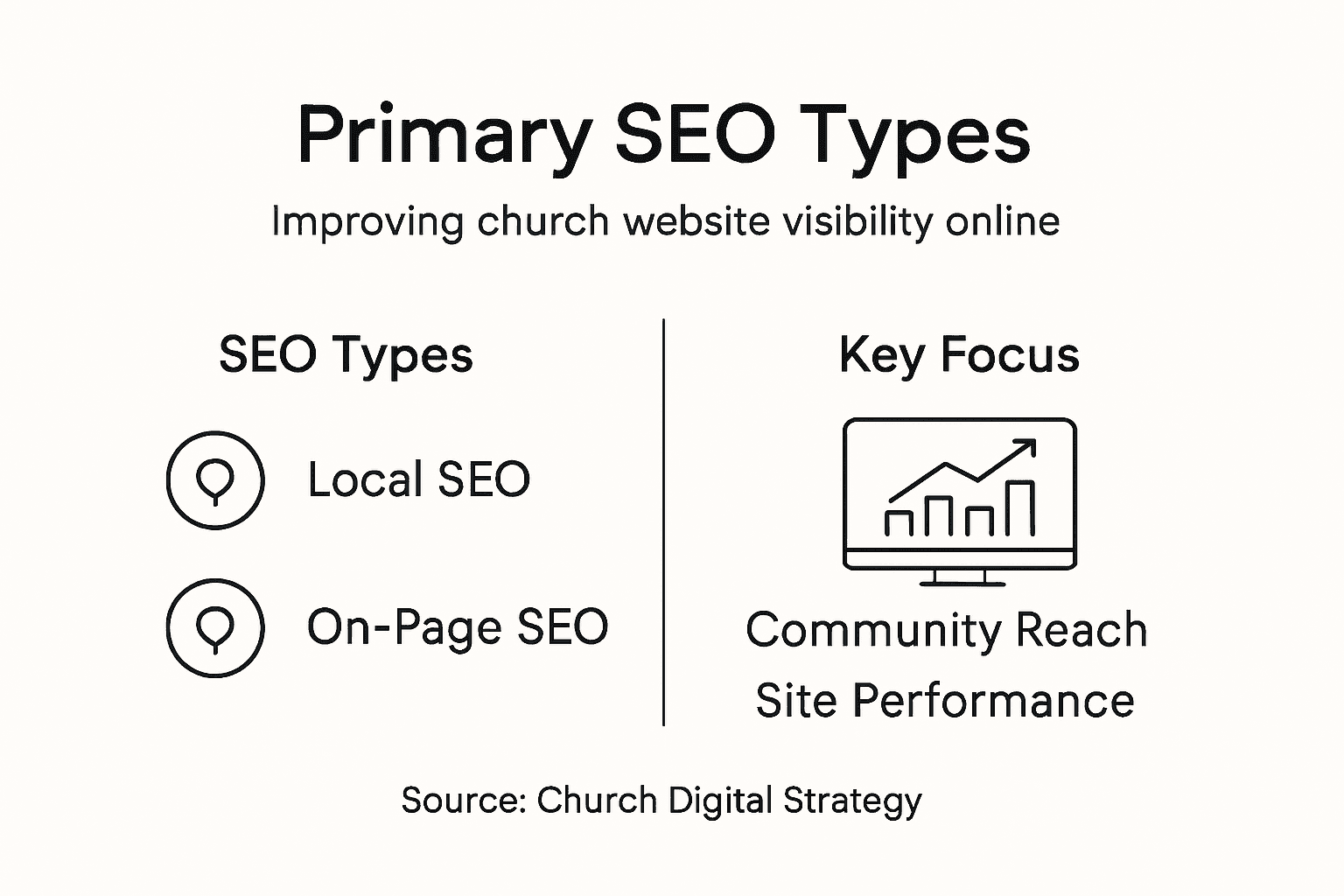
Each SEO type serves a unique purpose in improving a church’s digital strategy. Local SEO focuses specifically on geographic-specific searches, helping congregations appear in ‘churches near me’ queries. On-Page SEO involves optimizing website content, including sermon descriptions, event pages, and ministry information to make them more search-engine friendly.
Key Components of SEO Types:
- Local SEO
- Google My Business optimization
- Location-specific keywords
- Community event listings
- Local directory submissions
- On-Page SEO
- Keyword-rich content
- Metadata optimization
- Internal linking
- User-friendly page structures
- Technical SEO
- Website loading speed
- Mobile responsiveness
- Secure HTTPS connections
- Clean site architecture
Technical SEO ensures that search engines can easily crawl and index a church’s website. This includes optimizing site speed, ensuring mobile compatibility, and creating a clear website structure that helps both search engines and users navigate content efficiently.
Here is a summary of how different SEO types benefit church websites:
| SEO Type | Main Focus | Benefit to Churches |
|---|---|---|
| Local SEO | Targeting community-specific searches | Attracts nearby seekers |
| On-Page SEO | Optimizing site content and structure | Improves content discoverability |
| Technical SEO | Enhancing backend site performance | Boosts rankings and user experience |
Technical and local optimization work together to make churches more discoverable online.
The interconnected nature of these SEO types means churches must approach digital marketing holistically. Each type supports and enhances the others, creating a comprehensive strategy for online visibility.
Practical SEO Implementation Steps:
- Audit current website performance
- Optimize Google My Business profile
- Create locally relevant content
- Improve website technical elements
- Monitor and adjust SEO strategy regularly
Pro tip: Treat your church’s website like a digital front door, ensuring it’s welcoming, informative, and easy to navigate for both search engines and potential visitors.
How Church SEO Improves Visibility and Outreach
Strategic church SEO techniques transform digital outreach by making faith communities more discoverable and accessible to potential members searching online. Modern churches must view their digital presence as a critical extension of their ministry, reaching beyond physical walls to connect with individuals seeking spiritual guidance.
Effective SEO does more than improve search rankings. It creates a welcoming digital environment that reflects a church’s mission and values. By aligning website content with community needs, churches can attract newcomers who might never walk through their physical doors. This approach turns casual online searches into meaningful spiritual connections.
Key Benefits of Church SEO:
- Increased local visibility
- Higher engagement with potential members
- More accurate representation of church mission
- Improved community outreach
- Enhanced digital accessibility
Strategies for Expanding Digital Reach:
- Optimize Google My Business profile
- Create location-specific content
- Use relevant faith-based keywords
- Develop multimedia sermon content
- Encourage online reviews and testimonials
Local search optimization plays a crucial role in church digital marketing. By targeting geographic-specific keywords and maintaining accurate online listings, churches can appear prominently in ‘churches near me’ search results, directly connecting with local community members seeking spiritual homes.
SEO transforms a church’s website from a static information page to an active ministry tool.
Technical elements like mobile responsiveness, fast loading speeds, and clear navigation further enhance a church’s online presence. These factors not only improve search rankings but also provide a welcoming digital experience for potential visitors.
Pro tip: Treat your church’s online presence as a digital welcome center, ensuring every element communicates warmth, accessibility, and genuine community spirit.
Essential Website Features and Content Strategies
Church website optimization strategies demand a holistic approach that balances technical performance with engaging, mission-driven content. Modern churches must create digital experiences that are both technically sound and spiritually compelling, transforming websites from simple information repositories into dynamic ministry platforms.
Effective church websites require careful attention to both structural elements and content quality. The technical foundation involves responsive design, fast loading speeds, and intuitive navigation, while the content strategy focuses on creating meaningful, searchable materials that reflect the church’s unique mission and community values.

The table below compares essential church website features with their impact on outreach:
| Feature | Impact on Digital Outreach |
|---|---|
| Mobile responsiveness | Ensures access on all devices |
| Fast page loading times | Reduces visitor drop-offs |
| Clear navigation | Helps users find info easily |
| Secure HTTPS connection | Builds trust with potential members |
| Accessibility features | Welcomes users of all abilities |
Critical Website Features:
- Mobile responsiveness
- Fast page loading times
- Clear, intuitive navigation
- Secure HTTPS connection
- Accessibility features
- Cross-browser compatibility
Content Strategy Components:
- Regular blog post updates
- Sermon summary and archive
- Event announcements
- Ministry program descriptions
- Community testimonial sections
- Multimedia content integration
Keyword optimization plays a crucial role in making church content discoverable. By carefully selecting and integrating faith-based and location-specific keywords, churches can improve their search rankings and connect with potential members who are actively seeking spiritual community.
A well-designed church website serves as a digital front door, welcoming visitors and communicating the essence of your spiritual community.
Practical Content Development Steps:
- Conduct keyword research specific to faith communities
- Create a consistent content publishing schedule
- Develop multimedia sermon and worship content
- Update website information regularly
- Encourage member testimonials and engagement
Pro tip: Approach your church website as a living ministry tool, continuously evolving to meet the spiritual and practical needs of your online and offline community.
Local Listings, Reviews, and Community Engagement
Strategic local SEO practices transform how churches connect with their communities through digital platforms. Local online visibility goes beyond simple website presence, creating meaningful digital touchpoints that bridge physical and virtual spiritual experiences.
Google Business Profile optimization represents a critical foundation for local church digital marketing. By maintaining accurate Name, Address, and Phone (NAP) information, churches ensure potential members can easily find and connect with them online. This digital directory serves as a critical first impression and connection point for community seekers.
Key Local Listing Components:
- Accurate contact information
- Consistent business name
- Updated service times
- High-quality photos
- Location details
- Ministry descriptions
Effective Review Management Strategies:
- Encourage member testimonials
- Respond professionally to all reviews
- Share positive community experiences
- Address negative feedback constructively
- Highlight member transformation stories
- Maintain transparency
Online reviews function as powerful social proof for faith communities. Potential visitors often research churches through digital testimonials, making authentic, positive reviews crucial for building trust and attracting new members.
Community engagement transforms digital interactions into genuine spiritual connections.
Review Engagement Process:
- Create review request protocols
- Train leadership on response guidelines
- Develop a systematic review monitoring approach
- Celebrate positive community feedback
- Use reviews to improve church offerings
Pro tip: Treat online reviews as conversation starters, not just ratings, creating opportunities for meaningful community dialogue.
Avoiding SEO Mistakes and Overcoming Challenges
Common SEO mistakes for churches can significantly hinder digital visibility and community engagement. Understanding these pitfalls is crucial for developing a robust online strategy that effectively connects faith communities with potential members.
Navigating the complex landscape of search engine optimization requires churches to be proactive and strategic. Many faith organizations unknowingly undermine their digital presence through simple yet critical oversights that can dramatically reduce their online discoverability and impact.
Critical SEO Mistakes to Avoid:
- Neglecting keyword research
- Ignoring local SEO opportunities
- Poor website design
- Lack of mobile optimization
- Inconsistent content creation
- Improper meta tag usage
- Failing to track SEO performance
Challenges in Church Digital Marketing:
- Limited technical expertise
- Constrained resources
- Rapidly changing search algorithms
- Minimal marketing budgets
- Volunteer-driven digital efforts
- Complex technical requirements
Technical performance remains a significant challenge for churches. Ensuring website speed, mobile responsiveness, and clean site architecture requires ongoing attention and potentially specialized expertise that many faith communities find challenging to maintain.
Consistent, quality content and technical optimization are the cornerstones of effective church SEO.
Strategic Optimization Steps:
- Conduct regular SEO audits
- Invest in basic technical training
- Develop consistent content strategy
- Utilize free SEO tools
- Monitor website performance metrics
Pro tip: Treat SEO as an ongoing ministry effort, not a one-time task, dedicating consistent time and resources to digital outreach.
Elevate Your Church’s Online Presence with AI-Powered Content Solutions
The article “SEO for Churches: Grow Your Community Online” highlights the challenges churches face in implementing effective local SEO, creating engaging content, and maintaining a technical website foundation that connects with seekers in their communities. If you are struggling with limited technical resources, inconsistent content creation, or optimizing your site to rank higher in local searches then you are not alone. Many churches need a simple yet powerful way to consistently produce keyword-rich, mission-driven content that supports your outreach goals while ensuring your website performs flawlessly on search engines.

At Content Redefined, we specialize in helping ministries and faith-based organizations overcome these obstacles through our AI-powered content creation and SEO automation platform. Our easy-to-use tools generate high-quality articles, blog posts, and website content optimized for local SEO and technical standards so you can attract more visitors and foster genuine community connections online. Don’t let complicated SEO myths or limited volunteer resources hold back your digital ministry. Start creating impactful, discoverable content today with features like our AI content writer, FAQ generator, and automatic image insertion all tailored to streamline your church’s digital outreach. Visit Content Redefined now and experience how you can grow your congregation’s online impact with less effort and expert support.
Ready to boost your organic rankings with AI?
Unlock the power of our AI Content Platform—built for SEO, AI Search, GEO, and AEO.
Create high-quality, optimized content in just a few clicks.
✅ Free account with 5,000 words/month
✅ No credit card required
✅ Stay ahead with AI-powered content marketing
Don’t get left behind. Start for free today.
Try our AI Content Platform todayFrequently Asked Questions
What is SEO for churches?
SEO for churches is the practice of optimizing a church’s online presence to improve visibility in search engines. It involves strategies like optimizing website content, utilizing local SEO, and enhancing technical aspects to connect with potential members searching for spiritual guidance online.
How can local SEO benefit my church?
Local SEO helps congregations target community-specific searches, making it easier for nearby seekers to find them online. By optimizing listings on platforms like Google My Business and using location-based keywords, churches can significantly increase their visibility in ‘churches near me’ searches.
What are some key SEO strategies churches should implement?
Churches should focus on strategies such as claiming and optimizing their Google My Business profile, creating helpful and locally relevant blog content, ensuring a mobile-friendly website design, and maintaining consistent online citations and directory listings.
How does website design impact church SEO?
A well-designed website enhances user experience and influences SEO rankings. Key design aspects include mobile responsiveness, fast loading speeds, intuitive navigation, and secure HTTPS connections. These features help keep visitors engaged and encourage them to explore the church’s offerings.