
If you’ve been thinking about starting a college blog but keep getting stuck on “What would I even write about?”, you’re not alone. Between classes, work, and trying to have a social life, it can feel like blogging is just one more thing on your plate. Plus, there’s the whole “I’m not a great writer” and “Will anyone even read this?” spiral.
Here’s the thing: college is actually the perfect time to experiment with blogging ideas, build a portfolio, and maybe even earn a little side income—without needing to be an expert at anything. And you don’t have to do it all solo. Tools like AI writers (for example, contentredefined.ai) can help you brainstorm topics and clean up your drafts so hitting publish feels way less scary. In this post, we’ll walk through 10 specific, realistic blog niches for college students—and how to put your own spin on each one so your blog feels unique and sustainable.
If you have no idea where to start your college blog, college life and campus survival is the easiest (and most relatable) place to begin. This kind of content never gets old because every school, dorm, and friend group has its own weird traditions, struggles, and inside jokes. Plus, future students are literally Googling this stuff every day, so it’s a great way to get your first visitors fast.
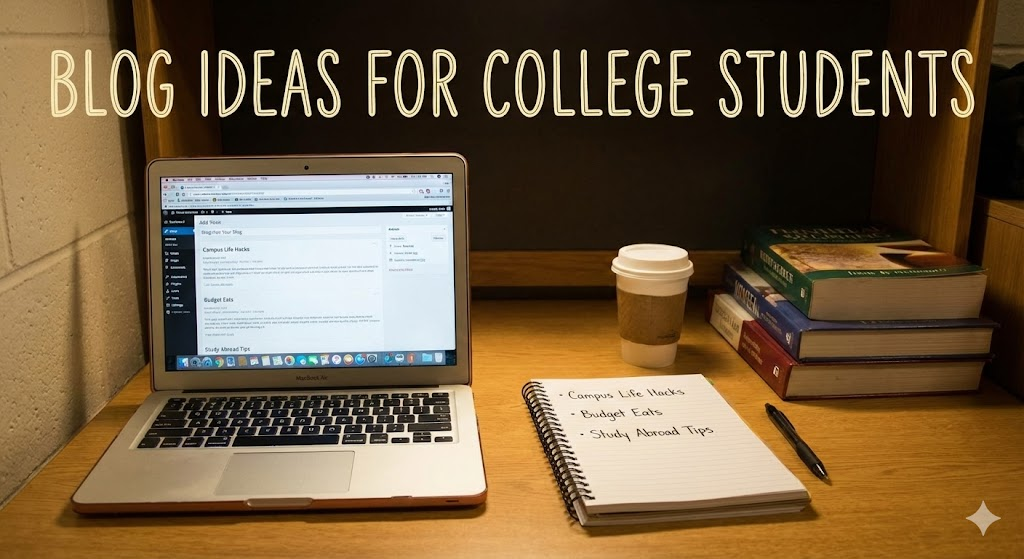
Blog Ideas For College Students
Here are some high-impact post ideas that top-ranking college blogs use all the time:
- “Day in the Life” posts: Show your schedule as a nursing major, commuter student, athlete, RA, or international student. Use phrases like “college life blog” and “day in the life of a [major] student” naturally in your titles and intros.
- Dorm life hacks: Storage ideas, decorating on a budget, noise/quiet hours, and how you handle roommate boundaries without drama.
- Campus survival tips: Orientation advice, how to join clubs without feeling awkward, making friends when you’re shy, best places to study or nap on campus.
- Real talk on mental health: How you deal with homesickness, burnout, or anxiety during midterms—plus where on campus people can actually get help.
If you feel like your thoughts are all over the place, an AI writer like contentredefined.ai can help you turn random notes about your day into a clean outline or first draft while still keeping your personality front and center.
How to Make Your Campus Blog Actually Stand Out
Instead of trying to sound like every other “college lifestyle” blog, zoom in on what makes your experience different. Maybe you’re:
- A STEM student balancing labs and late-night gaming
- An art or music major documenting projects, recitals, or critiques
- A first-gen, international, or transfer student figuring it all out on your own
- Living off-campus, commuting, or working full-time while in school
Tie every post back to your specific campus, traditions, and routines—mention buildings, events, or local spots by name. That makes your content more helpful for students who might actually attend your school and boosts your chances of showing up when people search for “[Your University] campus survival tips” or similar terms. Over time, this can turn your blog into the unofficial guide everyone sends to incoming freshmen.
Study Tips, Productivity, and Time Management Blogs
If you want a blog niche that’s always in demand, study tips and productivity are it. Every semester, thousands of students Google “how to stop procrastinating” and “study tips for college students,” which means your posts can genuinely help people and pull in steady traffic. The key is sharing what actually works for you in real life, not just repeating generic “wake up at 5am” advice.
Realistic study routines and systems that actually stick
Here are angles that make great, evergreen posts:
- Real weekly study routines for different schedules: commuter student, athlete, part-time worker, STEM-heavy course load, etc.
- Note‑taking methods you’ve tested (Cornell notes, digital vs. handwritten, tablet setups) with screenshots or examples from real classes.
- Exam prep strategies: how you go from “syllabus shock” to a day‑by‑day plan two weeks before the test.
- Digital tools and apps you truly use: Notion templates, Google Calendar layouts, task managers, and how you combine them.
Instead of pretending you’re perfectly organized, be honest about what didn’t work—maybe you tried color‑coding everything and still forgot deadlines. Walk readers through your “before/after”: what your grades, stress, or sleep looked like before you changed your habits and what they look like now.
Turning your study struggles into valuable content
A strong way to stand out from other college productivity blogs is to document experiments. For example, “I Tried the Pomodoro Technique for 21 Days—Here’s What Actually Happened” or “How I Went From Cramming All Night to Studying 2 Hours a Day (and Still Getting A’s).” Share screenshots of planners, time‑tracked weeks, and even failed attempts so readers see the full picture, not just the highlight reel.

Budgeting, Side Hustles, and Student Finance
Money stress is basically a core part of the college experience, which is exactly why it makes such a powerful blog niche. Student finance content is super searchable, easy to relate to, and genuinely helpful when you share real numbers and real mistakes—not just vague “save more, spend less” advice.
Realistic Money Diaries and Budget Breakdowns
Some solid, high-performing post ideas in this niche include:
- “What I Spend in a Week as a College Student”: Break down everything—rent, coffee, late-night Uber Eats, club fees—with honest commentary on what felt worth it and what didn’t.
- Your actual budget system: Show your spreadsheet, app setup, or notebook layout and how you adjust it during midterms, summer, or internship seasons.
- Saving on big-ticket student costs: Share how you cut textbook costs, found cheaper housing, or hacked your meal plan.
- Beginner-friendly financial literacy posts: Explain credit scores, student loans, and savings accounts in plain English, using your own situation as an example.
What most articles skip is the messy part: how your budget changes when you’re broke mid-semester, or what happens when you overspend and have to fix it. Writing about those pivots makes your money blog way more trustworthy and relatable.
Side Hustles That Actually Fit a College Schedule
Instead of generic “start a business” advice, zoom in on side hustles you’ve actually tried and document the process:
- Campus-based gigs: Tutoring, RA jobs, lab assistant roles, tour guiding—share pay rates, hours, and pros/cons.
- Flexible online work: Freelancing, design, editing, virtual assisting—talk about how you find clients between classes.
- Reselling and micro-hustles: Flipping textbooks, vintage clothes, or dorm essentials; explain your sourcing, pricing, and profit margins.
Major-Specific and Academic Journey Blogs
Blogging about your major and academic journey is one of the smartest moves you can make as a college student. Instead of trying to appeal to “everyone in college,” you zoom in on people who are exactly where you are (or want to be). That kind of niche, major-focused content tends to rank well, attract super-engaged readers, and double as a portfolio you can literally drop into internship and grad school applications.
What to Share as a [Your Major] Student
Here are some high-value post ideas that work across different majors:
- Pre-med & health majors: Semester study schedules, how you juggle labs + volunteering, MCAT prep diaries, reflections from shadowing or clinical experiences.
- Computer science & engineering: Walkthroughs of your coding projects, LeetCode/interview prep logs, internship experience breakdowns, hackathons you’ve joined.
- Business & economics: Case competition recaps, club roles, networking event debriefs, “day in the life” during an internship or co-op.
- Arts & humanities: Behind-the-scenes of studio projects, rehearsals, writing theses, conference presentations, building a creative portfolio on a budget.
- Undecided or switching majors: Honest posts about why you changed paths, how you explored options, and what you wish you’d known earlier.
You can also document choosing a concentration, double majoring, or minoring, and how each decision affects your workload and career plans. This kind of practical, real-life detail is exactly what high-intent readers (and Google) love.
Turning Your Academic Story Into a Powerful Portfolio
To go beyond basic “what I study” posts, connect your academic content to real-world goals: grad school, career pivots, freelancing, or entrepreneurship. For example, write posts like “How My Psychology Major Helped Me Land a UX Research Internship” or “From Bio to Business: Why I Switched Majors in Junior Year.”
Treat each post as a mini case study: What was the challenge, what did you do, and what did you learn? Over time, your blog becomes a living archive of your growth. When you’re stuck, tools like an AI writer (for example, contentredefined.ai) can help you outline complex experiences—like your MCAT journey or senior project—in a clear, structured way, while you focus on adding the personal details only you can share.
Career Prep, Internships, and Networking
If you want your blog to double as a “hire me” sign, this is your niche. Career prep and internship content is huge because every college student is low‑key stressed about what happens after graduation. Writing about your internship search, job applications, and networking wins (and fails) not only helps others, it also quietly shows employers you’re proactive and reflective.
Career-focused post ideas that actually help people
Here are high-value topics you can turn into posts:
- How you landed your internship: Break down your timeline, where you applied, how many rejections you got, and what finally worked.
- Resume and LinkedIn tweaks that got results: Share specific changes—keywords you added, sections you cut, how you framed campus projects as real experience.
- Networking without being cringe: Scripts for cold DMs, how you follow up after a career fair, and what you actually ask in informational interviews.
- Balancing work + classes: Your weekly schedule, energy-management tips, and boundaries you set so you didn’t burn out.
You can even include redacted email templates, cover letter snippets, and recruiter feedback—this kind of behind-the-scenes detail is what most top-ranking posts miss and what stressed juniors are Googling at 1 a.m.
Turning your blog into a living portfolio
Don’t just talk about your skills—show them. Write breakdowns of:
- Class projects you’re proud of and what you specifically contributed
- Internship reflections: what you learned, mistakes you made, and what you’d do differently next time
- Skill deep-dives: “How I taught myself SQL in one semester” or “What managing a campus club taught me about leadership”
This kind of content makes your blog a portfolio you can actually link on your resume.
Health, Wellness, and Mental Health in College
College can be amazing, but it can also be… a lot. Between classes, work, social stuff, and constant deadlines, wellness and mental health are huge topics other students are actively Googling—but most blogs only skim the surface. This is your chance to create real, honest content that helps people feel less alone while sharing what’s actually worked (and not worked) for you.

Real Talk on Stress, Burnout, and Campus Resources
Here are some powerful post angles you can explore:
- Navigating campus counseling and health services: Step‑by‑step guides on how to book an appointment, what to expect in your first session, and what to do if there’s a waitlist.
- Coping with exam stress, imposter syndrome, and burnout: Share specific moments you struggled, the signs you ignored, and the turning points that made you change habits.
- Realistic fitness and movement routines: 10–20 minute dorm‑friendly workouts, walking routines between classes, or “movement snacks” during long study days.
- Eating decently on a meal plan or tight budget: How you build balanced plates in the dining hall, snack ideas, and “bare minimum” nutrition tips for exam weeks.
You can also write “before/after” style posts about times you hit burnout and what you adjusted (sleep, caffeine, scrolling, study schedule).
Unique Angles: Identity, Expectations, and Boundaries
Where you’ll really stand out is by talking about the nuances most blogs skip:
- Cultural or family expectations: How pressure to get certain grades or choose a “respectable” major affects your mental health—and how you’re learning to cope or push back.
- First‑gen and international student experiences: The stress of figuring out everything alone, homesickness, language barriers, or sending money home while studying.
- Neurodivergent perspectives: Writing about ADHD, autism, anxiety, or depression in college from your lived experience (with clear disclaimers that you’re not a professional).
- Boundary-setting: Posts on saying no to extra commitments, dealing with group project freeloaders, or emailing professors when you’re struggling.
Wrap each post with resources: crisis lines, campus contacts, and articles or books that helped you. That extra bit of care instantly makes your college wellness blog more trustworthy and genuinely helpful than most of what’s already ranking.
Dorm Decor, Fashion, and Lifestyle Aesthetics
If you love Pinterest boards, outfit inspo, or rearranging your room for the third time this semester, this is your lane. A college lifestyle blog that leans into dorm decor, fashion, and overall “vibe” does really well because people are constantly searching for practical but aesthetic ideas they can copy on a student budget.
Visual Ideas That Actually Work in a Tiny Space
- Before/after dorm transformations: Show the raw “move-in day” chaos vs. the finished room, with product links and honest prices.
- Theme-based decor posts: Minimalist, boho, cottagecore, gamer setup, plant girl, etc.—pick one and go deep with color palettes, must-have items, and storage ideas.
- Outfit and lookbook content: “What I wear in a week as a [major],” presentation outfits, internship fits, game day looks, and comfy exam-week clothes.
- Capsule wardrobe for college: Build 15–20 pieces that mix and match for class, nights out, and interviews—great for budget-conscious readers.
- Organization and storage hacks: Under-bed solutions, closet maximizers, DIY shelves, and how you keep it all from becoming a disaster by week three.
You can go beyond what most articles do by talking about real constraints—tiny closets, strict dorm rules, shared spaces, and being broke. Show what you’d actually buy again vs. what was totally not worth it.
Adding Personality and Monetizing Your Aesthetic Content
Instead of trying to copy the same Pinterest-perfect room everyone has, center your blog on your reality: thrifted-only decor, plus-size fashion on a budget, eco-conscious choices, or styling within cultural or religious guidelines. Those angles are seriously under-served and make your blog memorable.
You can also treat these posts as mini-portfolio pieces if you’re into design, fashion, or social media. Include mood boards, flat lays, and short styling videos, then embed or link them. Over time, these posts can attract brand collabs or affiliate income, especially if you’re consistent and honest about what you use and love.
Food, Meal Prep, and Campus Dining Hacks
Food content is one of the easiest wins for a college blog—everyone has to eat, everyone’s broke, and everyone’s tired of the same sad ramen. Posts about easy college meals, dorm room recipes, and cheap meals for students perform really well on search and social, especially when they’re realistic and budget-friendly.

Easy, Cheap, Actually-Doable College Meals
Here are angles that go beyond the typical “10 ramen hacks” posts:
- Dorm-friendly recipes: 10-minute microwave meals, no-oven cookie hacks, mug breakfasts, and late-night study snacks you can make with just a mini-fridge and microwave.
- Realistic meal prep: How you prep 2–3 simple base meals on Sunday (like rice, roasted veggies, chicken/tofu) and remix them all week without getting bored.
- Budget and time breakdowns: For each recipe, share cost per serving, how long it takes, and what tools you used—this extra detail makes your posts way more helpful than most.
- Diet-specific content: Vegan on a meal plan, gluten-free in a carb-heavy cafeteria, halal/kosher options on campus—these niches are underserved and highly searchable.
You can also review your campus dining halls: best stations, “hacks” to build better bowls or salads, and how to avoid blowing all your swipes by mid-semester.
Making Your College Food Blog Stand Out
To stand out from other food and student lifestyle blogs, focus on honest context: show what your tiny kitchen setup looks like, include photos of the “messy but real” versions of your meals, and talk about weeks when you relied on frozen pizza. Those details make your content relatable, not just aspirational.
If writing recipes feels overwhelming at first, you can jot down rough notes and then use a helper tool (an AI writer like contentredefined.ai, for example) to turn them into clear, step-by-step instructions while you focus on testing the food and taking photos. Over time, you’ll build a go-to library of meals that future students—and your future, busier self—will seriously thank you for.
Skyrocket Organic Traffic Today
Ready to take your organic rankings to the next level with AI? Our own AI SEO Writer has you covered. Registration is free and comes with 5000 words per month with a free account. AI Content is just some clicks away!
Try our AI SEO Writer todayPersonal Growth, Relationships, and Identity in College
College isn’t just about classes and exams—it’s also where a lot of your biggest personal growth happens. That’s why blogs about self-discovery, relationships, and identity resonate so much. People don’t just want “tips”; they want real stories from someone who’s actually in the thick of it, not a distant expert who graduated 10 years ago.
Honest stories that students actually relate to
Here are angles that go way deeper than generic “be yourself” advice:
- Confidence and finding your voice: Share how you went from being quiet in seminars to leading group projects or speaking up in class. What specific moments pushed you to grow?
- Friendships, dating, and breakups: Talk about navigating friend drama, making friends after a transfer, or handling long‑distance relationships without sugarcoating it.
- Identity and belonging: Reflect on exploring culture, gender identity, sexuality, religion/spirituality, or being first‑gen or an international student. What helped you feel seen and safe?
- Boundaries and burnout: Write about learning to say no—to clubs, group work, family expectations—and how that changed your mental health and GPA.
You can also frame posts as letters to your younger self (“Dear Freshman Me…”) or to your future self. That format keeps things reflective but structured, which readers love because it feels like advice and a story at the same time.
Turning reflection into powerful, helpful posts
To add extra value, don’t just tell what happened—unpack what you learned and offer simple prompts your readers can use, like journal questions or conversation starters for tough talks with family or partners. If you struggle to organize deep, messy thoughts into something readable, using an AI writer such as contentredefined.ai can help you shape your reflections into clear outlines while still keeping the emotions and voice 100% yours.
Over time, this kind of content becomes a timeline of who you’re becoming. It’s not just therapeutic for you—it gives other students language for things they’re feeling but haven’t managed to say out loud yet.
Tech, Tools, and Content Creation as a College Student
If you’re a college student running a blog, you’re basically juggling two full‑time jobs: school and content creation. This is where a whole ecosystem of tech tools, apps, and smart workflows can save your sanity and help you publish consistently without living in your drafts folder forever.
Tools that Actually Make College Blogging Easier
Here are super-practical posts you can create around the tools that keep your life (somewhat) together:
- “My Notion Setup as a College Blogger”: Show how you track classes, deadlines, blog ideas, and a content calendar in one place.
- “Apps I Use Every Day as a Student Creator”: Think Google Calendar, Todoist, Notion, Canva, Google Drive, Grammarly, Trello, etc.—and how you actually use them, not just a random list.
- “Behind the Scenes of Writing One Blog Post”: Walk through your workflow from idea → research → drafting → editing → scheduling → promotion.
- “How I Batch Content Around Midterms/Finals”: Your system for drafting multiple posts when you have free time so you’re not writing from scratch during exam week.
You can even share how you lightly use AI tools like contentredefined.ai to brainstorm outlines or first-draft ideas while still doing the personal storytelling and editing yourself. Readers like seeing a realistic, modern toolkit, not a fantasy routine no one can maintain.
Blogging About Blogging (Without Being Cringe)
“Blogging as a college student” and “best apps for college students” are popular searches, but most posts stay surface-level. Go deeper by:
- Showing real numbers: How long posts take, how many drafts you scrap, how you schedule content around labs or studio time.
- Sharing your promo strategy: Exactly how you repurpose one blog post into TikToks, Instagram Reels, Pinterest pins, and maybe a newsletter.
- Documenting your learning curve: What changed from your first month of blogging to month six—design tweaks, SEO basics you picked up, or how using an AI writer like contentredefined.ai helped you beat writer’s block and stick to a posting schedule.
Wrap these ideas into honest, process-focused posts and you’ll attract other student creators, potential collaborators, and maybe even future clients. Plus, this kind of content doubles as a living portfolio that quietly shows off your organization, tech skills, and consistency—all things employers and brands actually care about.
Frequently Asked Questions
Q: I want to start a blog in college but have no idea what to write about. Where do I even begin?
A: Start by listing the problems you’re currently solving in your own life: managing classes, finding cheap food, balancing relationships, dealing with stress, hunting for internships, etc. Each of those can become a category on your blog. Then pick 1–2 from this article’s list (like study tips + food, or campus life + personal growth) and commit to writing 3–5 posts in each. If you feel stuck, you can even drop a few bullet points into an AI writer like contentredefined.ai and let it suggest angles and outlines you wouldn’t have thought of on your own.
Q: How often should a college student realistically post on their blog?
A: You don’t need to publish daily. With classes, work, and a social life, once a week is a solid, sustainable goal. If that’s too much, aim for two quality posts a month and batch-write on weekends or breaks. The key is consistency: pick a schedule you can actually keep for a whole semester and stick to it so readers (and search engines) know you’re alive.
Q: Can a college blog actually make money, or is that just hype?
A: It can, but it’s not instant. Most student bloggers who earn something do it through a mix of display ads, affiliate links, brand deals, and freelance work that comes from their blog portfolio. Think of money as a bonus at first and focus on building helpful content around clear topics like student finance, study tips, or career prep. Once you’re getting traffic, you can test simple monetization like recommending products you genuinely use (textbooks, apps, dorm gear) with affiliate links.
Q: What if I’m not a “good writer”? Will anyone take my blog seriously?
A: People don’t come to college blogs for perfect prose; they come for relatable, honest stories and practical tips. You’ll get better just by writing regularly. To make things less intimidating, draft in your own messy voice first, then run it through a tool like contentredefined.ai to tidy up structure, fix awkward sentences, and suggest clearer headings—without losing your personality.
Q: How do I balance blogging with classes and everything else?
A: Treat your blog like another (fun) class. Block 2–3 hours a week in your calendar for “content lab.” Use that time to batch ideas, outline posts, or edit photos. Plan posts that fit your life instead of fighting it: turn a stressful exam week into a “how I studied” post, or a grocery run into a “what I spend in a week” breakdown. When your blog grows out of your real routines, it’s way easier to keep going.
Ready to Turn Your College Experience into a Blog? Here’s Your Move
You’ve seen how many angles you can take as a college blogger: campus life and survival, realistic study tips, money and side hustles, major-specific journeys, career prep, wellness, style, food, personal growth, and even the tech side of content creation. There isn’t one “correct” niche. What actually matters is showing up honestly, sharing what you’re learning in real time, and letting your blog double as a creative outlet, portfolio, and maybe even a future income stream.
Instead of overthinking it, pick 1–2 ideas from this guide and outline your first post today. Keep it simple: a catchy title, 3–5 main points, and a real story from your life. If you feel stuck, let an AI writing assistant like contentredefined.ai help you brainstorm and structure your thoughts while you stay in control of the voice and experiences. Then hit publish, commit to posting consistently for the next 30–60 days, and give your college story the chance to actually be heard.
Ready to boost your organic rankings with AI?
Unlock the power of our AI Content Platform—built for SEO, AI Search, GEO, and AEO.
Create high-quality, optimized content in just a few clicks.
✅ Free account with 5,000 words/month
✅ No credit card required
✅ Stay ahead with AI-powered content marketing
Don’t get left behind. Start for free today.
Try our AI Content Platform today


Nice post. I learn something totally new and challenging on websites
We are happy to hear that.