
A content planning platform vs hiring a content strategist comparison is not really about software versus people. It is about finding the bottleneck that is holding your content back.
A platform can help you turn a clear direction into a repeatable publishing process. A strategist can help when the direction itself is unclear: who you serve, what you should say, which topics matter, and what you should stop creating.
For most founders, the decision comes down to four questions:
- Is your positioning clear enough to guide content choices?
- Do you need help making decisions, or help following through on them?
- How much founder time can you give the process each week?
- Do you have someone who can own content from idea to publication?
Quick decision: platform, strategist, or both?
| Your situation | Best starting point | Why |
|---|---|---|
| Your offer and audience are clear, but publishing keeps slipping | Content planning platform | You need a simpler process and a realistic cadence. |
| Your topics feel random and your message changes often | Content strategist | You need direction before you create more content. |
| You have writers or creators, but their work misses the mark | Strategist, then platform | Improve the brief and priorities first; then make the workflow repeatable. |
| You are launching a new offer or entering a new market | Content strategist | Clear messaging matters before you increase output. |
| You have a small team that needs a steady process | Platform, with occasional strategic support | A shared workflow helps work move forward without rebuilding the plan each month. |
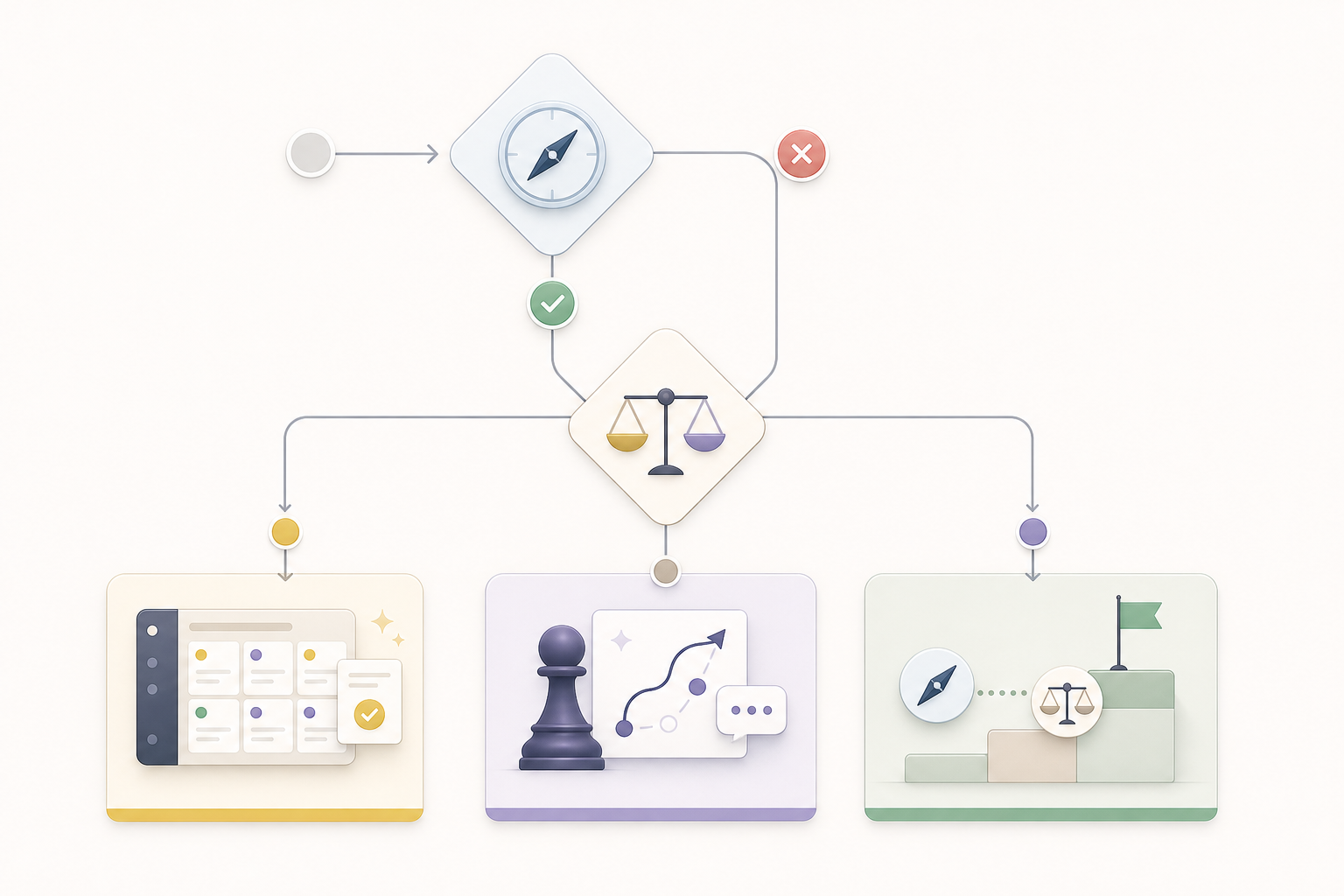
| You need both clarity and consistency | Both, in sequence | Strategy sets the direction; a platform helps maintain it. |
If your main issue is missed deadlines rather than a lack of ideas, read why founders struggle with consistent publishing. A calendar often fails because the work around it has no clear owner or next step.

What does a content strategist do?
A content strategist makes decisions before content production begins. They are not simply a writer with a senior title.
Their work may include clarifying the audience, offer, message, priorities, content themes, and success measures. They may review existing content, sales objections, customer questions, and the work of writers or creators. The goal is to help the business create content with a reason behind it.
A strategist should also help you decide what not to do. This is often their most useful contribution.
A founder may be tempted to publish a blog, newsletter, video series, podcast, and daily social posts at the same time. A strategist may recommend one primary channel and a small set of useful themes instead. That is not a smaller ambition. It is a plan that has a chance of being sustained.
MarketerHire’s overview of the role offers a useful primer on the difference between strategic direction and content production.
Strategy is different from creation
A writer, designer, editor, or video producer may be excellent at making content. They may not be responsible for deciding why a piece exists or where it fits in the buyer journey.
A strategist helps answer questions such as:
- Which customer problem should this piece address?
- What should the reader understand after reading it?
- Does this topic support the offer or distract from it?
- Is this an educational article, comparison page, use-case piece, or decision-stage asset?
- What proof, examples, or expert input does the piece need?
If you know exactly what to create but lack production capacity, you may need a creator. If you cannot explain why a topic belongs in the plan, you may need strategic help first.
When hiring a strategist makes sense
A strategist is most helpful when getting the message wrong would cost time, budget, or momentum. Common triggers include:
- A repositioning or new offer
- Confusion about the ideal customer
- Low-quality leads from existing content
- Internal disagreement about topics or channels
- Heavy founder rewrites of team content
- Consistent publishing that does not support sales conversations
Strategic support can also help when content planning without a niche feels scattered. You do not need perfect positioning before you begin. You do need a working point of view: a defined audience, a problem you solve, and a credible outcome. Without those anchors, every topic can look equally important.
What a content planning platform solves best
A platform is strongest when you have enough direction to act but struggle to repeat the work. It can give your process one home: a place to capture business context, direct content, manage planned work, and support a consistent schedule.
That matters when content planning feels overwhelming as a founder. The problem is often not a shortage of ideas. It is too many loose notes, half-finished drafts, channel choices, and decisions competing for attention.
Content Redefined AI provides a structured, founder-focused approach to introducing your business, directing content, and maintaining a publishing rhythm. It is best viewed as support for planning and execution, not as a substitute for senior judgment about positioning or major market changes.
Why content planning systems fail
Most systems do not fail because the founder chose the wrong app. They fail because the system creates too much work at the wrong time.
Common problems include:
- Topics are spread across notes, spreadsheets, and message threads.
- The plan depends on inspiration rather than a repeatable process.
- No one owns the next step for a draft.
- The publishing target is too ambitious for the team’s real capacity.
- The business changes, but the calendar does not.
A platform can reduce this friction by making the process visible. It cannot settle a fundamental disagreement about who the business serves or what it should be known for. Fix that first.
For more on the decision load behind this problem, see why content planning feels overwhelming as a founder.
A simple planning method for founders
A useful system does not need a huge annual calendar. It needs a sequence your team can follow:
- Define the business. State the audience, offer, problem, and proof you can support.
- Choose a few content lanes. These may include education, use cases, objections, comparisons, and customer questions.
- Match topics to intent. Some content helps readers understand a problem; other content helps them evaluate a solution.
- Set a minimum viable cadence. Pick a schedule you can keep during busy periods.
- Give every item a next step. Research, outline, draft, review, publish, or retire.
- Review and subtract. Remove topics, formats, and channels that lack a clear purpose.
This structured content planning method for founders is designed for real operating conditions. A smaller plan that gets finished is more useful than a large plan that restarts every month.
Compare budget, time, and management work
The price is only one part of the decision. A strategist and a platform create different work for the founder.
Budget: compare the scope
A platform subscription is usually a predictable operating expense. Its value depends on whether you use the structure often enough to improve planning and publishing.
A strategist may work on a defined project, as a fractional adviser, or as an ongoing partner. Fees can vary based on experience, scope, market, and how much hands-on editorial work is included. Instead of relying on a generic rate range, ask what you will receive.
Before hiring, clarify:
- The business problem the engagement will address
- The deliverables at the end of the first phase
- Whether the work includes research, planning, briefs, writing, editing, or all of these
- Who owns approval and publishing
- How much founder time the work needs
- How the plan will be reviewed after launch
A low-cost engagement with vague deliverables can create more management work than it removes. A larger investment can make sense when it prevents months of off-target production.
Time: neither option is fully hands-off
Hiring a strategist does not remove the need for founder input. Useful strategy needs product knowledge, sales objections, customer questions, and examples of what buyers value. Without that input, even a capable strategist may produce generic work.
A platform also needs commitment. You still need time to set priorities, review work, and decide what moves forward. For a small team, a short weekly review is often easier to sustain than a long monthly planning session.
If you are still choosing a primary format, vlog vs blog can help you weigh written and recorded content before you add more channels.
Results: choose signals that fit the goal
Neither choice makes rankings, leads, or revenue automatic. Results depend on the offer, audience fit, quality of execution, distribution, competition, and time.
Use signals that match the purpose of the work:
- Decision-stage pages: qualified enquiries, demo requests, or sales-call mentions
- Educational content: relevant search impressions, engaged readers, email sign-ups, or return visits
- Workflow health: completed pieces, approval time, missed deadlines, and revision volume
Traffic alone can mislead. A page can attract readers who will never buy. A smaller audience of well-matched readers may be more valuable.
Five common founder scenarios
1. You do not have a clear niche yet
Start with a strategist or a focused strategy exercise. Write a working statement: “We help [audience] achieve [outcome] without [common obstacle].” Then choose three content themes that support it.
Treat this as a working hypothesis, not a permanent slogan. Refine it with customer and sales insight. Once it is clear enough to guide choices, use a platform to turn it into a manageable plan.
2. Your calendar keeps collapsing
Start with a platform and reduce the cadence. A simple plan completed each month is better than an ambitious plan abandoned each month.
Set a minimum standard for busy weeks, such as reviewing one draft or publishing one useful piece. The goal is continuity, not maximum volume.
3. You publish consistently but do not convert
Start with strategy. Review whether each piece answers a real buyer question and gives readers a sensible next step. The issue may be intent, offer clarity, messaging, or distribution—not effort alone.
Ask: if a qualified prospect read this page, would they understand who you help, what changes for them, and what to do next?
4. You have creators but weak briefs
Use both in sequence. A strategist can establish the audience, priorities, and briefing standards. A platform can help the team apply them consistently.
A useful brief states the reader, problem, core promise, desired action, format, and required proof or examples.
5. You are scaling beyond founder-led content
Keep the operating model simple. Name one owner for the workflow, even if several people create content. Define who sets direction, edits, reviews subject matter, publishes, and decides when a piece is done.
Founders should keep ownership of product truth, customer insight, major message changes, and high-stakes claims. They should not need to approve every small decision forever.
A staged approach often works best
The content planning platform vs hiring a content strategist choice does not need to be permanent or either/or.
Stage 1: set the direction
Use strategic support when you need to define the audience, message, priorities, and content to stop creating. Leave with a short plan people can use, not a large document that sits unread.
Stage 2: build a publishing rhythm
Use a platform to turn that direction into a repeatable process. Set a realistic cadence, define draft stages, and make ownership clear.
Stage 3: return to strategy when the business changes
Revisit strategy when you launch an offer, enter a market, hear new sales objections, or see a lasting gap between attention and qualified demand. Do not wait for the calendar to become a list of unfinished ideas.
Questions to ask before hiring a freelance or fractional strategist
- What business problem will you solve first?
- What inputs do you need from us, and how much founder time will that take?
- What will we receive at the end of the first phase?
- How do you separate strategy from writing or production?
- How will you use customer research, sales conversations, and product knowledge?
- What topics or channels would you advise us to stop pursuing, and why?
- Who owns implementation after the strategy is delivered?
- How will we review whether the plan is producing better signals?
Be cautious of promises about performance before the strategist understands your offer, audience, and existing work. A credible adviser should explain their assumptions and trade-offs.
FAQ
Can a content planning platform replace a content strategist?
Not fully. A platform can support planning, workflow, and consistency. A strategist brings judgment when you need difficult decisions about positioning, priorities, and messaging. If your direction is clear, a platform may be enough to get moving. If it is not, start with strategy.
How do I choose based on budget and time?
If budget is tight and your direction is clear, begin with a platform and a modest publishing commitment. If your positioning is unclear, strategic help may prevent wasted production. If you can invest in both, use strategy to set the system and a platform to run it month to month.
Why does content planning feel overwhelming as a founder?
It often means you are trying to decide the audience, topic, format, channel, and approval process every time you publish. Reduce the number of choices. Choose a few content lanes, a realistic cadence, and one place to manage the work.
Choose the option that removes the real bottleneck
Choose a platform when you have enough clarity but need a system for steady execution. Hire a strategist when unclear positioning, mixed messages, or weak priorities are causing content to drift.
If you need both, set the direction first, then build a practical workflow around it. Content Redefined AI can support the structured planning side: helping founders turn a clearer business direction into an ongoing publishing process.